

Hey there! As a tantalum foil supplier, I often get asked if tantalum foil can be welded. It's a great question, and today I'm gonna break it down for you.
First off, let's talk a bit about tantalum foil. Tantalum is a super interesting metal. It's highly corrosion - resistant, has a high melting point, and is used in a bunch of industries like electronics, aerospace, and chemical processing. We offer different types of tantalum foil, like the 99.99% High Purity Tantalum Foil, Deep Drawing Tantalum Sheet, and Ultra - thin Ta1 0.03 Tantalum Foil. These products have unique properties that make them suitable for various applications.
Now, back to the main question: Can tantalum foil be welded? The short answer is yes, but it's not as straightforward as welding some other metals. Tantalum has a high melting point of around 3017°C (5463°F). This high melting point means that you need a welding process that can generate enough heat to melt the tantalum foil.
One of the most common welding methods for tantalum foil is Tungsten Inert Gas (TIG) welding. TIG welding uses a non - consumable tungsten electrode to create an arc that melts the metal. It's a great option because it allows for precise control of the heat input. You can adjust the amperage and the duration of the arc to make sure you're not overheating the tantalum foil. Overheating can cause problems like grain growth in the metal, which can weaken the welded joint.
Another method is Electron Beam Welding (EBW). In EBW, a high - velocity beam of electrons is focused on the area to be welded. The kinetic energy of the electrons is converted into heat, melting the tantalum foil. This method is really good for welding in a vacuum environment, which is important because tantalum can react with oxygen and nitrogen in the air at high temperatures. A vacuum helps prevent these reactions and ensures a clean, strong weld.
Laser Beam Welding (LBW) is also an option. LBW uses a highly concentrated laser beam to melt the metal. It's fast and can be automated, which is great for mass production. However, just like with other methods, you need to be careful with the heat input. If the laser is too powerful or the welding speed is too slow, you can end up with a damaged tantalum foil.
But there are some challenges when welding tantalum foil. One big issue is contamination. Tantalum is very reactive at high temperatures. If there's any oxygen, nitrogen, or hydrogen present during the welding process, it can react with the tantalum and form brittle compounds. These compounds can reduce the strength and ductility of the welded joint. That's why it's crucial to use a shielding gas, like argon, when using TIG welding, or to perform the welding in a vacuum for EBW.

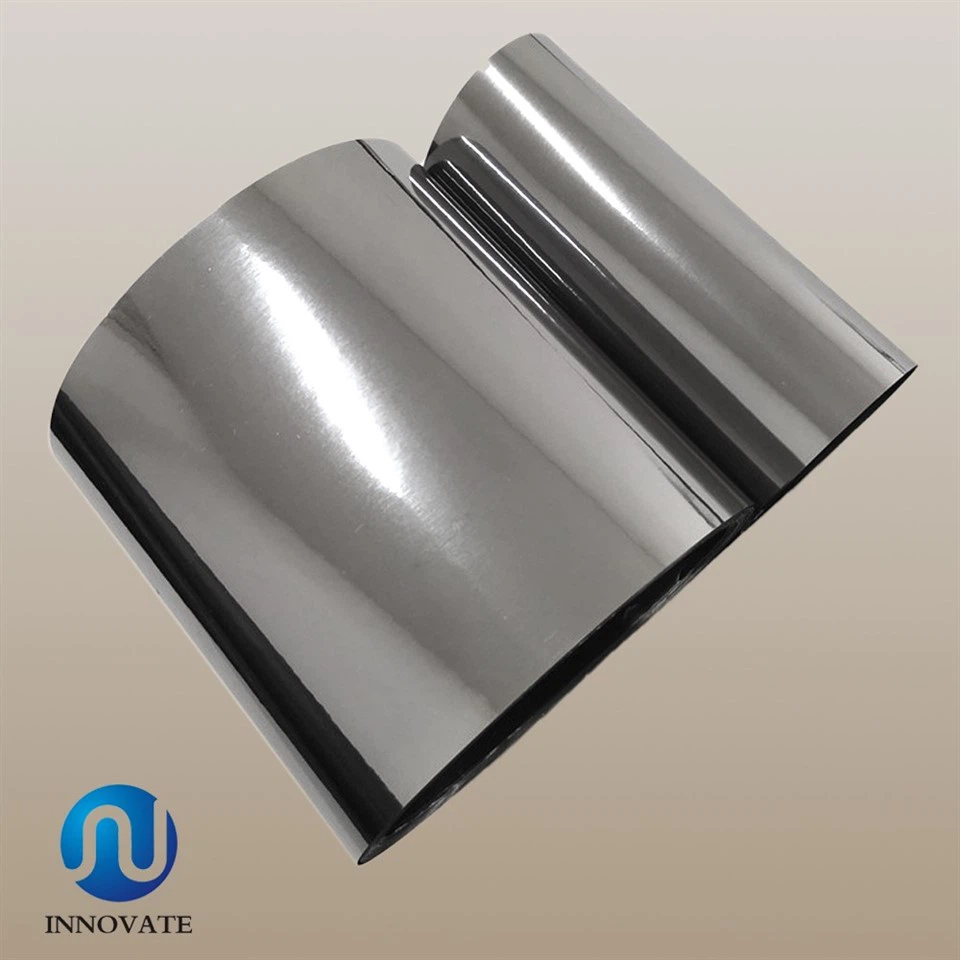
The thickness of the tantalum foil also matters. Thinner foils are more difficult to weld because they can easily warp or burn through. You need to be extra careful with the heat settings and the welding speed. For example, our Ultra - thin Ta1 0.03 Tantalum Foil requires very precise welding techniques to avoid damage.
Before you start welding tantalum foil, you also need to prepare the surface properly. Any dirt, grease, or oxide layer on the surface can affect the quality of the weld. You can clean the foil using solvents and abrasives to remove these contaminants.
Once the welding is done, you might need to perform some post - weld treatments. Heat treatment can help relieve the internal stresses in the welded joint and improve its mechanical properties. For example, annealing the welded foil at a specific temperature for a certain period can make the joint stronger and more ductile.
In the electronics industry, welded tantalum foil is used in capacitors. The high corrosion resistance of tantalum makes it ideal for this application. The ability to weld the foil allows for the creation of complex capacitor designs. In the aerospace industry, welded tantalum components can be used in engine parts because of their high - temperature resistance.
If you're thinking about using welded tantalum foil in your project, you need to consider the cost. Welding tantalum is more expensive than welding some other metals because of the special equipment and processes required. But the unique properties of tantalum, like its corrosion resistance and high melting point, often make it worth the investment.
As a tantalum foil supplier, I'm here to help you with all your tantalum needs. Whether you're looking for the right type of tantalum foil or need advice on the welding process, feel free to reach out. If you're interested in purchasing our 99.99% High Purity Tantalum Foil, Deep Drawing Tantalum Sheet, or Ultra - thin Ta1 0.03 Tantalum Foil, we can have a chat about your requirements and see how we can work together.
In conclusion, tantalum foil can be welded, but it requires careful consideration of the welding method, surface preparation, and post - weld treatments. With the right approach, you can create strong and reliable welded joints using tantalum foil. So, if you've got a project in mind that involves tantalum foil welding, don't hesitate to get in touch. Let's discuss how we can make your project a success.
References
- "Welding of Refractory Metals" - A technical guide on welding metals like tantalum.
- "Tantalum: Properties and Applications" - A comprehensive study on the properties and uses of tantalum in different industries.