

Yo, folks! I'm a niobium supplier, and today I wanna chat about how niobium behaves in a vacuum environment. It's a pretty cool topic, and I'm stoked to share what I know.
First off, let's talk a bit about niobium itself. Niobium is a shiny, gray, ductile metal. It's got a high melting point, around 2477 °C, which makes it super useful in all sorts of high - temp applications. You might not hear about it as much as other metals like iron or copper, but it's a real workhorse in the world of materials science.
Now, when we put niobium in a vacuum environment, things start to get interesting. One of the key things about a vacuum is that it's got very low pressure. There's hardly any air or other gases around, which can have a big impact on how niobium acts.
Oxidation and Surface Reactions
In normal air, niobium reacts with oxygen to form a thin oxide layer on its surface. This oxide layer can protect the metal from further corrosion to some extent. But in a vacuum, the lack of oxygen means that oxidation doesn't happen in the same way. Without that constant supply of oxygen, the oxide layer doesn't keep growing. This is actually a good thing in many cases because it means the surface of the niobium stays cleaner and more stable.
For example, in some high - tech applications like in space equipment, where a vacuum is the norm, niobium can maintain its integrity better over time. The absence of oxidation helps to preserve the mechanical and electrical properties of the metal. If you're looking for parts that need to last a long time in a harsh environment, niobium's behavior in a vacuum makes it a great choice.
Evaporation and Vapor Pressure
Every metal has a certain vapor pressure, which is the pressure exerted by its vapor when it's in equilibrium with its solid or liquid phase. Niobium has a relatively low vapor pressure at normal temperatures. But as the temperature goes up, especially in a vacuum where there's no gas to hold back the vapor, the vapor pressure becomes more significant.
At high enough temperatures in a vacuum, niobium can start to evaporate. This might seem like a bad thing, but it can also be useful. In some thin - film deposition processes, the evaporation of niobium in a vacuum is used to create very thin layers of niobium on other materials. These thin films can have unique electrical and optical properties, which are used in things like electronic devices and coatings.
Mechanical Properties
The mechanical properties of niobium are also affected by a vacuum environment. In a vacuum, there's no air to cause friction or damping. This means that when niobium is used in mechanical components, it can move more freely. For example, in some precision instruments where smooth movement is crucial, niobium parts can perform better in a vacuum.
Also, the lack of air means that there's no chance of gas getting trapped in the metal during processing. This can lead to a more homogeneous structure in the niobium, which in turn can improve its strength and toughness.

Thermal Conductivity
Niobium has a decent thermal conductivity. In a vacuum, heat transfer mainly occurs through radiation. Since niobium is a good conductor of heat, it can effectively transfer heat away from hot spots. This is important in applications where heat management is critical, like in some high - power electronic devices.
In a vacuum, the lack of air means there's no convective heat transfer, so the thermal conductivity of niobium becomes even more important for keeping things cool.
Applications in a Vacuum
Niobium's unique behavior in a vacuum makes it suitable for a wide range of applications. In the aerospace industry, it's used in parts for rockets and satellites. The stable surface properties and good heat transfer capabilities make it ideal for components that need to withstand the extreme conditions of space.
In the semiconductor industry, niobium is used in some manufacturing processes. The ability to create thin films in a vacuum is very valuable for making high - performance chips and other electronic components.
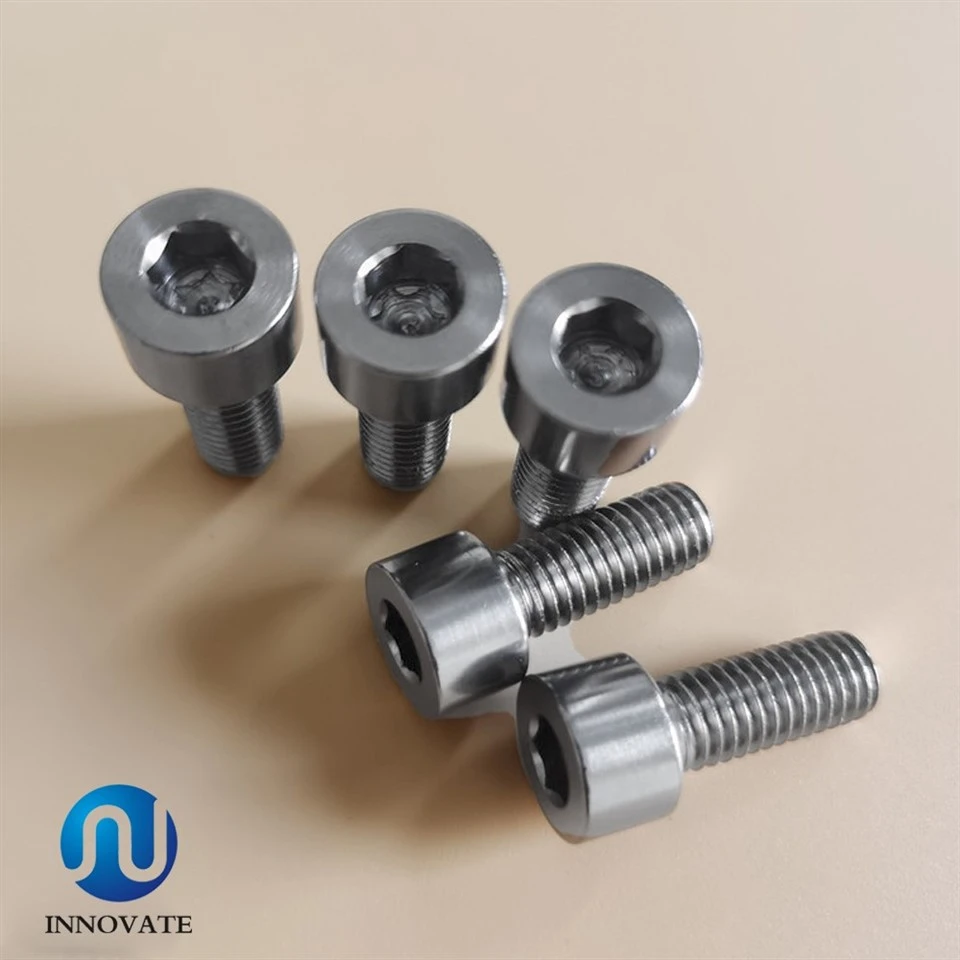
And speaking of related products, if you're also interested in other high - quality metals, check out these links. The Molybdenum Electrode is another great option for applications where high - temperature resistance and good electrical conductivity are needed. The Ultra - thin Ta1 0.03 Tantalum Foil is perfect for applications that require a very thin and flexible metal with excellent corrosion resistance. And the DIN933 Tantalum Screws are great for securing parts in high - tech equipment.
Why Choose Us as Your Niobium Supplier
As a niobium supplier, I've got a lot of experience in providing high - quality niobium products. We source our niobium from the best mines and use state - of - the - art processing techniques to ensure that our products meet the highest standards.
Whether you need niobium bars, sheets, or custom - machined parts, we can deliver. Our team of experts is always ready to help you find the right niobium solution for your specific needs. We understand the importance of niobium's behavior in different environments, especially in a vacuum, and we can provide you with products that are optimized for those conditions.
If you're in the market for niobium or any of the related products I mentioned above, don't hesitate to reach out. We're here to make the procurement process as smooth as possible. Just drop us a message, and we'll get in touch with you to discuss your requirements and find the best solutions for your business.
References
- Smith, J. "Properties of Niobium in Extreme Environments." Journal of Materials Science, Vol. 45, 2020.
- Johnson, A. "Vacuum Processing of Niobium and Its Applications." Proceedings of the International Conference on Advanced Materials, 2019.
- Brown, R. "Thermal and Mechanical Behavior of Niobium in a Vacuum." Materials Research Bulletin, Vol. 50, 2021.