

Hey there! As a molybdenum rod supplier, I often get asked about how to measure the electrical conductivity of a molybdenum rod. It's a super important aspect, especially when you're dealing with high - performance applications. So, in this blog, I'll walk you through the whole process.
First off, let's understand why measuring the electrical conductivity of a molybdenum rod is so crucial. Molybdenum is a metal known for its excellent electrical and thermal conductivity, high melting point, and good mechanical strength at elevated temperatures. These properties make it a go - to material for various industries, like electronics, aerospace, and metallurgy. In electronics, for example, precise electrical conductivity is essential for components to function correctly.
Now, before we start measuring, we need to gather some tools. You'll need a four - point probe system, a power supply, an ammeter, a voltmeter, and of course, the molybdenum rod itself. We offer different types of molybdenum rods, such as the High Temperature Resistant MO1 Molybdenum Rod, the MO1 Polished Molybdenum Rod, and the 99.99% Pure Molybdenum Rod. Each type might have slightly different conductivity characteristics, so it's important to know which one you're working with.
The four - point probe method is the most common way to measure the electrical conductivity of a molybdenum rod. Here's how it works. First, you place the molybdenum rod on a flat and clean surface. Make sure it's stable. Then, position the four - point probe on the rod. The outer two probes are connected to the power supply and the ammeter, while the inner two probes are connected to the voltmeter.
When you turn on the power supply, an electric current is passed through the outer two probes into the molybdenum rod. This current flows through the rod, and as it does, a voltage is developed across the inner two probes. The voltmeter measures this voltage. According to Ohm's law, resistance (R) is equal to voltage (V) divided by current (I), i.e., R = V / I.
Once you've measured the resistance, you can calculate the electrical conductivity (σ). The formula for conductivity is σ = 1 / ρ, where ρ is the resistivity. The resistivity of the molybdenum rod can be calculated using the formula ρ = R * A / L, where A is the cross - sectional area of the rod and L is the length of the rod between the inner two probes.
It's important to note that the temperature can have a significant impact on the electrical conductivity of a molybdenum rod. As the temperature increases, the conductivity usually decreases. So, if you're measuring the conductivity in a real - world application, you need to take the temperature into account. You can use a temperature - controlled environment or apply temperature correction factors to your measurements.
Another thing to consider is the surface condition of the molybdenum rod. A dirty or oxidized surface can affect the contact between the probes and the rod, leading to inaccurate measurements. That's why it's a good idea to clean the rod before the measurement. You can use a mild solvent to remove any dirt or contaminants on the surface.
Now, let's talk about some potential errors that might occur during the measurement. One common error is improper probe placement. If the probes are not placed correctly on the rod, the current distribution might be uneven, which can lead to inaccurate resistance and conductivity measurements. Make sure the probes are in good contact with the rod and are evenly spaced.
Also, the quality of the power supply and the measuring instruments can affect the results. Make sure your power supply provides a stable current and your ammeter and voltmeter are calibrated correctly. Using low - quality instruments can introduce significant errors into your measurements.
In some cases, you might want to measure the conductivity at different points along the molybdenum rod. This can help you detect any inhomogeneities in the rod. If the conductivity varies significantly at different points, it could indicate a problem with the manufacturing process or the material itself.
If you're new to measuring the electrical conductivity of molybdenum rods, it's a good idea to practice a few times. You can start with a sample rod and make multiple measurements to get a feel for the process. Compare your results with known values to check the accuracy of your measurements.
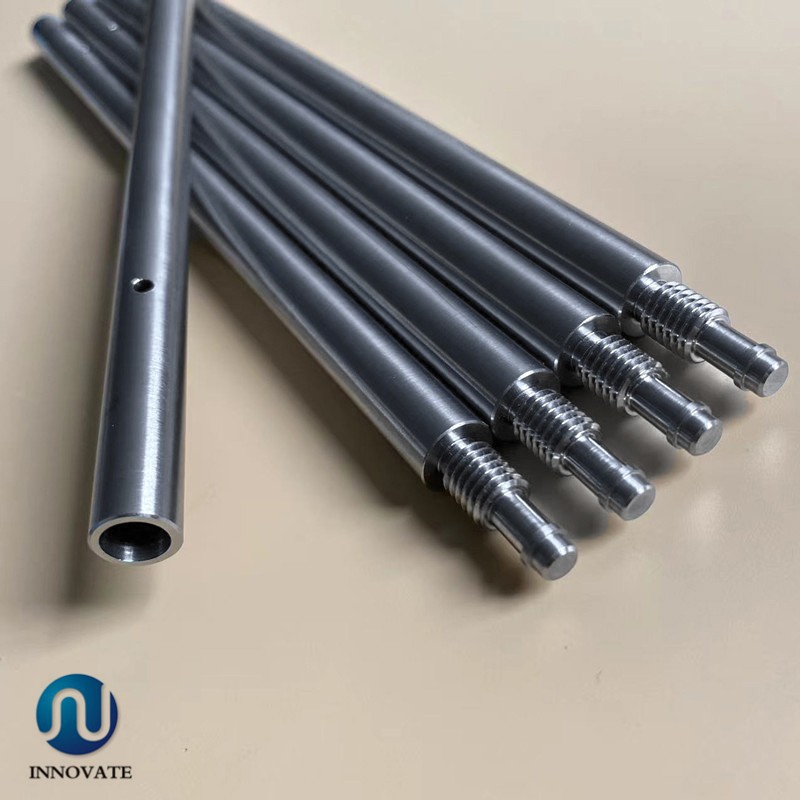

As a molybdenum rod supplier, we understand the importance of accurate conductivity measurements. Our products are made with high - quality materials and strict manufacturing processes to ensure consistent and reliable conductivity. Whether you need a rod for a small - scale experiment or a large - scale industrial application, we've got you covered.
If you're interested in purchasing molybdenum rods for your projects, don't hesitate to get in touch. We're here to answer any questions you might have and to help you choose the right product for your needs. Contact us for more information and let's start a great business relationship.
References
- "Electrical Conductivity of Metals" - A textbook on materials science
- Research papers on molybdenum properties and applications in scientific journals.