

As a molybdenum rod supplier, understanding how to measure the modulus of elasticity of a molybdenum rod is crucial. The modulus of elasticity, also known as Young's modulus, is a fundamental property of materials that describes their stiffness. It represents the ratio of stress to strain within the elastic limit of a material. For molybdenum rods, accurately measuring this property helps in assessing their quality, predicting their performance in various applications, and ensuring they meet the required specifications.
Importance of Measuring the Modulus of Elasticity
Molybdenum is a refractory metal with excellent high - temperature strength, corrosion resistance, and good electrical and thermal conductivity. Molybdenum rods are widely used in industries such as electronics, aerospace, and metallurgy. The modulus of elasticity is a key parameter in engineering design. In aerospace applications, for example, molybdenum rods may be used in structural components. Knowing the modulus of elasticity allows engineers to calculate how much the rod will deform under a given load, which is essential for ensuring the safety and reliability of the structure.
In the electronics industry, molybdenum rods are used in semiconductor manufacturing equipment. The modulus of elasticity affects the precision of the equipment. If the modulus is not within the specified range, it may lead to inaccurate positioning or deformation during operation, which can significantly impact the quality of semiconductor products.
Methods for Measuring the Modulus of Elasticity of a Molybdenum Rod
Tensile Testing
Tensile testing is one of the most common methods for measuring the modulus of elasticity. In this method, a molybdenum rod specimen is placed in a tensile testing machine. The machine applies a gradually increasing axial load to the specimen until it reaches its elastic limit or breaks.
During the test, the load applied to the specimen and the corresponding deformation (strain) are measured. The stress is calculated by dividing the applied load by the cross - sectional area of the specimen. The strain is the ratio of the change in length to the original length of the specimen.
The modulus of elasticity (E) is then calculated using the formula (E=\frac{\sigma}{\epsilon}), where (\sigma) is the stress and (\epsilon) is the strain. To obtain accurate results, the test should be carried out under controlled conditions, such as a constant testing speed and a specific temperature.
However, tensile testing has some limitations. It requires relatively large specimens, and the test process is destructive, which means the specimen cannot be reused after the test.
Ultrasonic Testing
Ultrasonic testing is a non - destructive method for measuring the modulus of elasticity. In this method, ultrasonic waves are sent through the molybdenum rod. The velocity of the ultrasonic waves in the material is related to its elastic properties.
The modulus of elasticity can be calculated based on the measured ultrasonic wave velocity, the density of the molybdenum rod, and Poisson's ratio. Poisson's ratio is another material property that describes the lateral contraction of a material when it is stretched axially.
The advantage of ultrasonic testing is that it is non - destructive, which means the molybdenum rod can still be used after the test. It also allows for rapid testing, making it suitable for quality control in mass production. However, ultrasonic testing requires specialized equipment and trained operators, and the accuracy of the results can be affected by factors such as the surface condition of the rod and the presence of internal defects.
Preparation for the Measurement
Before measuring the modulus of elasticity, proper preparation is necessary.
Specimen Preparation
If using the tensile testing method, the molybdenum rod specimen should be prepared according to relevant standards. The specimen should have a uniform cross - section and a smooth surface to ensure accurate load application and deformation measurement. The length and diameter of the specimen should be carefully measured to calculate the cross - sectional area and strain accurately.
For ultrasonic testing, the surface of the molybdenum rod should be cleaned to remove any dirt, oil, or oxide layers. A coupling agent may be used to ensure good contact between the ultrasonic transducer and the rod surface, which helps in the transmission of ultrasonic waves.
Equipment Calibration
The testing equipment, whether it is a tensile testing machine or an ultrasonic testing device, should be calibrated regularly. Calibration ensures that the measured values are accurate and reliable. For example, in a tensile testing machine, the load cell and the extensometer should be calibrated to ensure accurate measurement of the load and deformation.
Factors Affecting the Measurement Results
Several factors can affect the measurement results of the modulus of elasticity of a molybdenum rod.
Temperature
Molybdenum is a material whose mechanical properties are sensitive to temperature. As the temperature increases, the modulus of elasticity of molybdenum generally decreases. Therefore, the temperature during the measurement should be carefully controlled and recorded. If the measurement is carried out at a different temperature from the application temperature, appropriate temperature correction factors may need to be applied.
Microstructure
The microstructure of the molybdenum rod can also affect the modulus of elasticity. Factors such as grain size, crystal orientation, and the presence of impurities or defects can influence the elastic behavior of the material. For example, a finer grain size may result in a higher modulus of elasticity due to the increased resistance to deformation at the grain boundaries.
Loading Rate
In tensile testing, the loading rate can affect the measured modulus of elasticity. A higher loading rate may lead to a slightly higher measured modulus due to the viscoelastic behavior of the material. Therefore, a consistent loading rate should be used during the test to ensure reproducibility of the results.
Applications of Molybdenum Rods and the Significance of Modulus of Elasticity
Molybdenum rods have a wide range of applications, and the modulus of elasticity plays a vital role in these applications.
High - Temperature Applications
In high - temperature environments, such as in furnaces and aerospace engines, molybdenum rods are used because of their high - temperature resistance. The modulus of elasticity at high temperatures determines how much the rod will deform under load, which is crucial for maintaining the structural integrity of the components. For instance, in a high - temperature furnace, molybdenum rods may be used as heating elements or support structures. If the modulus of elasticity at high temperatures is too low, the rods may deform excessively, leading to failure of the furnace.
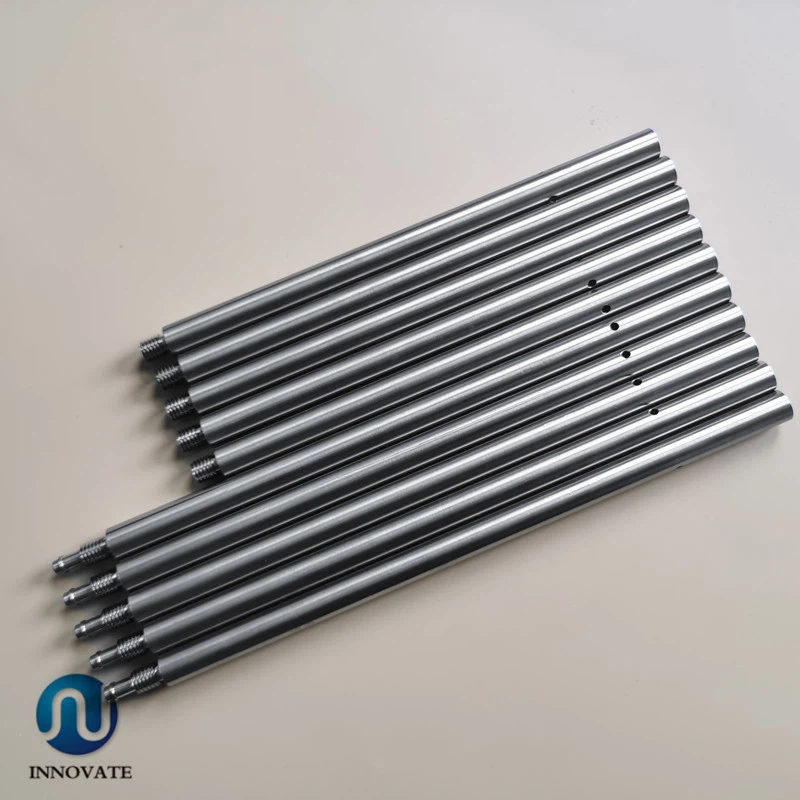
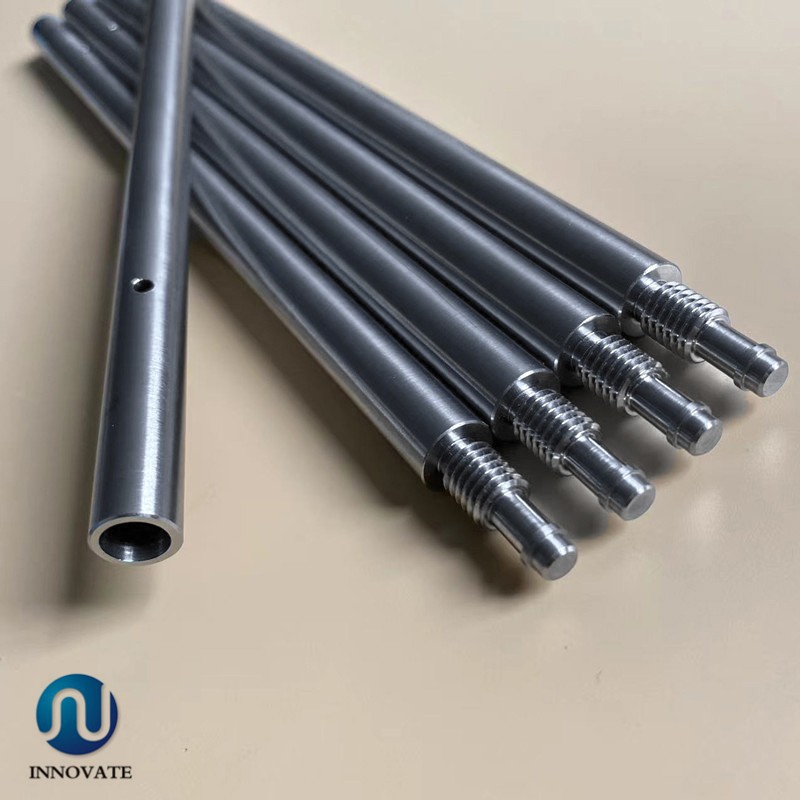
You can find our High Temperature Resistant MO1 Molybdenum Rod suitable for such high - temperature applications.
Precision Instrumentation
In precision instrumentation, such as in optical and electronic devices, molybdenum rods are used for their dimensional stability. The modulus of elasticity ensures that the rods maintain their shape and position under different loads, which is essential for the accuracy of the instruments. Our MO1 Polished Molybdenum Rod is an excellent choice for precision instrumentation applications.
Conclusion
Measuring the modulus of elasticity of a molybdenum rod is a complex but essential process. Different methods, such as tensile testing and ultrasonic testing, have their own advantages and limitations. Proper specimen preparation and equipment calibration are necessary to obtain accurate results. Various factors, including temperature, microstructure, and loading rate, can affect the measurement results.
As a molybdenum rod supplier, we are committed to providing high - quality molybdenum rods that meet the strictest standards. Understanding the modulus of elasticity of our products helps us ensure their performance in different applications. If you are interested in purchasing molybdenum rods or have any questions about their properties, please feel free to contact us for further discussion and negotiation.
References
- Callister, W. D., & Rethwisch, D. G. (2011). Materials Science and Engineering: An Introduction. Wiley.
-ASM Handbook Committee. (1990). ASM Handbook Volume 1: Properties and Selection: Irons, Steels, and High - Performance Alloys. ASM International.