

As a seasoned molybdenum rod supplier, I understand the critical role that surface roughness plays in the performance and quality of molybdenum rods. Surface roughness can significantly affect the functionality, durability, and even the aesthetic appeal of these rods, which are widely used in various industries due to their excellent properties such as high melting point, good thermal conductivity, and corrosion resistance. In this blog, I will delve into the methods of measuring the surface roughness of a molybdenum rod, providing valuable insights for both manufacturers and end - users.
Why Measuring Surface Roughness Matters
Before we explore the measurement methods, it's essential to understand why surface roughness is so important. In applications where molybdenum rods are used in high - precision equipment, a smooth surface can ensure proper fit and function. For example, in electrical contacts, a rough surface may increase contact resistance, leading to energy loss and potential overheating. In the semiconductor industry, where molybdenum rods are often used as components, surface roughness can affect the deposition and etching processes, ultimately influencing the quality of the semiconductor devices.
Methods of Measuring Surface Roughness
1. Profilometer Method
The profilometer is one of the most commonly used instruments for measuring surface roughness. It works by physically tracing the surface of the molybdenum rod with a stylus. As the stylus moves along the surface, it detects the vertical variations, and the instrument records these variations to calculate the surface roughness parameters.
There are two main types of profilometers: contact and non - contact. Contact profilometers have a stylus that directly touches the surface of the molybdenum rod. They are highly accurate and can measure a wide range of roughness values. However, they may cause slight damage to the surface, especially if the surface is very soft or delicate.
Non - contact profilometers, on the other hand, use optical or laser technology to measure the surface without physical contact. They are suitable for measuring the surface of fragile or easily damaged molybdenum rods. For example, laser profilometers project a laser beam onto the surface and measure the reflected light to determine the surface topography. This method is fast and can cover a relatively large area in a short time.
2. Optical Microscopy Method
Optical microscopy can also be used to estimate the surface roughness of a molybdenum rod. By observing the surface under a microscope, we can get a visual understanding of the surface texture. However, this method is more qualitative than quantitative. It can help us identify large - scale surface features such as scratches, pits, and grains, but it is difficult to obtain precise numerical values for surface roughness.
To make the measurement more quantitative, we can use techniques such as interferometry in combination with optical microscopy. Interferometry works by creating an interference pattern between a reference beam and a beam reflected from the surface of the molybdenum rod. By analyzing the interference pattern, we can measure the height variations on the surface with high precision.
3. Atomic Force Microscopy (AFM)
Atomic Force Microscopy is a powerful tool for measuring surface roughness at the nanoscale. It uses a tiny probe with a sharp tip to scan the surface of the molybdenum rod. The interaction force between the probe tip and the surface atoms is measured, and this force is used to map the surface topography.
AFM can provide extremely high - resolution images of the surface, allowing us to measure very small surface features. It is particularly useful for applications where nanoscale surface roughness is crucial, such as in the research and development of advanced materials and micro - electronic devices. However, AFM is relatively expensive and time - consuming, and it requires a clean and stable environment for accurate measurement.
Factors Affecting Surface Roughness Measurement
When measuring the surface roughness of a molybdenum rod, several factors need to be considered to ensure accurate results.
1. Sampling Length
The sampling length is the length along the surface over which the roughness measurement is taken. A longer sampling length can provide a more representative measurement of the overall surface roughness, but it may also include larger - scale surface variations that are not related to the local roughness. On the other hand, a shorter sampling length may focus on local surface features but may not accurately represent the entire surface.
2. Measurement Direction
The surface roughness of a molybdenum rod may vary depending on the measurement direction. For example, if the rod has been machined in a particular direction, the roughness may be different along the machining direction and perpendicular to it. Therefore, it is important to specify the measurement direction when reporting the surface roughness values.
3. Surface Contamination
Surface contamination, such as oil, dust, or oxidation, can affect the accuracy of surface roughness measurement. Before measurement, the molybdenum rod should be carefully cleaned to remove any contaminants. Special cleaning methods may be required depending on the type of contamination.
Applications of Surface Roughness Measurement in the Molybdenum Rod Industry
As a molybdenum rod supplier, I know that surface roughness measurement is not only important for quality control but also for product development and customer satisfaction.
In the manufacturing process, surface roughness measurement can help us monitor the machining processes, such as turning, grinding, and polishing. By adjusting the machining parameters based on the measured surface roughness, we can ensure that the molybdenum rods meet the required quality standards.
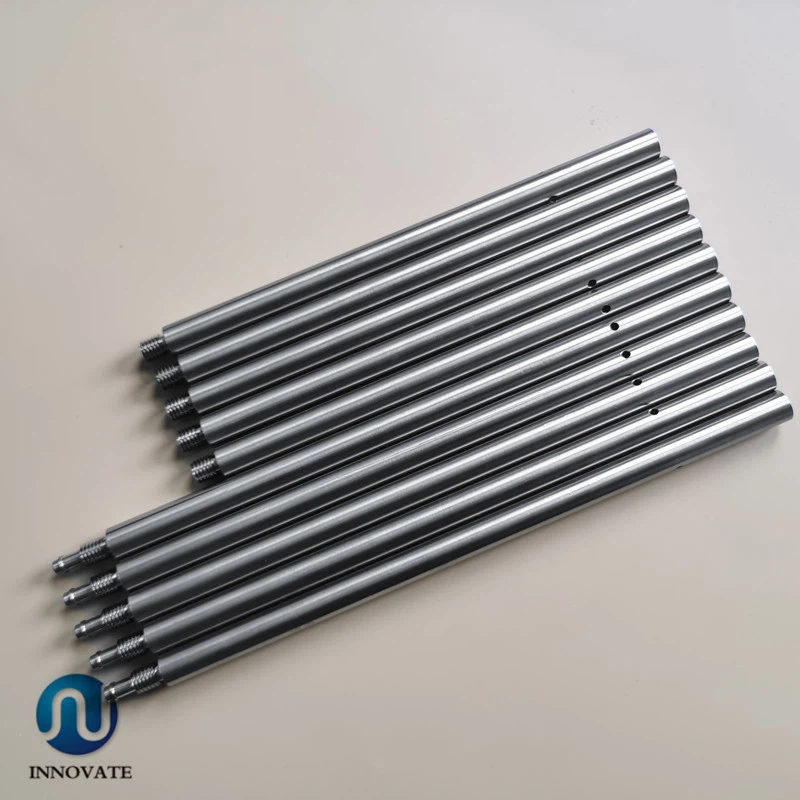
For customers, the surface roughness information can be used to select the most suitable molybdenum rods for their specific applications. For example, if a customer needs a molybdenum rod for a high - precision application, they may prefer a rod with a lower surface roughness. We offer a variety of molybdenum rods with different surface finishes, such as the High Temperature Resistant MO1 Molybdenum Rod, MO1 Polished Molybdenum Rod, and 99.99% Pure Molybdenum Rod, to meet different customer requirements.
Conclusion
Measuring the surface roughness of a molybdenum rod is a crucial step in ensuring its quality and performance. By using appropriate measurement methods and considering the influencing factors, we can obtain accurate surface roughness values. As a molybdenum rod supplier, we are committed to providing high - quality products with the desired surface finishes. If you are interested in our molybdenum rods or have any questions about surface roughness measurement, please feel free to contact us for further discussion and potential procurement. We look forward to serving you and meeting your molybdenum rod needs.

References
- Bhushan, B. (2002). Handbook of Micro/Nanotribology. CRC Press.
- ISO 4287:1997. Geometrical Product Specifications (GPS) - Surface texture: Profile method - Terms, definitions and surface texture parameters.
- Thomas, T. R. (1999). Surface Metrology: Principles and Applications. World Scientific.