

How to Test the Quality of Tantalum Tubes
As a tantalum tube supplier, ensuring the high - quality of our products is of utmost importance. Tantalum tubes are widely used in various industries, such as the chemical industry, electronics, and aerospace, due to their excellent corrosion resistance, high melting point, and good ductility. In this blog, I will share with you several methods to test the quality of tantalum tubes.
1. Visual Inspection
Visual inspection is the most basic and straightforward method. First, check the surface of the tantalum tube for obvious defects. Look for cracks, scratches, pits, or inclusions on the outer and inner surfaces. Cracks can significantly reduce the mechanical strength of the tube and may lead to failure during use. Scratches can also act as stress concentration points, increasing the risk of corrosion and mechanical damage. Pits and inclusions can affect the uniformity of the material and its performance.
For example, if there are large inclusions on the surface of the tantalum tube, it may indicate problems during the manufacturing process, such as improper melting or purification. These inclusions can cause local corrosion or mechanical weakness. Additionally, check the straightness of the tube. A bent or warped tube may not fit properly in the intended application and can also cause problems during installation and operation.
2. Dimensional Measurement
Accurate dimensional measurement is crucial for tantalum tubes. The outer diameter, inner diameter, and wall thickness should be measured precisely. Any deviation from the specified dimensions can affect the performance of the tube. For instance, if the wall thickness is too thin, the tube may not be able to withstand the pressure in a high - pressure application. On the other hand, if the wall thickness is too thick, it may increase the weight and cost of the product without adding significant benefits.
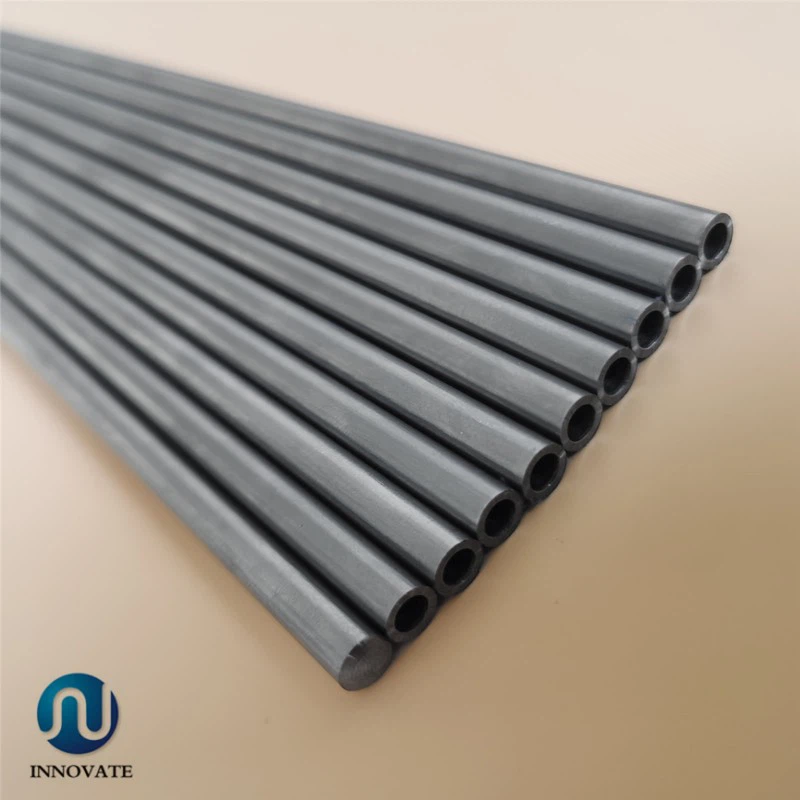
We can use calipers, micrometers, or other precision measuring tools for dimensional measurement. These tools can provide accurate readings, allowing us to ensure that the tantalum tubes meet the required specifications. In addition to the diameter and wall thickness, the length of the tube should also be measured to ensure it is within the tolerance range.
3. Chemical Composition Analysis
The chemical composition of tantalum tubes is a key factor in determining their quality. Tantalum tubes should have a high purity of tantalum, usually above 99%. Impurities such as niobium, tungsten, and iron can affect the corrosion resistance and other properties of the tube.
There are several methods for chemical composition analysis. One common method is X - ray fluorescence (XRF) analysis. XRF can quickly and non - destructively determine the elemental composition of the tantalum tube. It can detect the presence of various elements and provide semi - quantitative or quantitative results. Another method is inductively coupled plasma mass spectrometry (ICP - MS). ICP - MS is a more accurate and sensitive method that can detect trace elements in the tantalum tube. It can provide detailed information about the chemical composition, which is essential for ensuring the quality of the product.
4. Mechanical Property Testing
Mechanical property testing is necessary to evaluate the strength and ductility of tantalum tubes. Tensile testing is one of the most important mechanical property tests. In a tensile test, a sample of the tantalum tube is pulled until it breaks. The test measures the ultimate tensile strength, yield strength, and elongation of the tube. The ultimate tensile strength is the maximum stress the tube can withstand before breaking, while the yield strength is the stress at which the tube begins to deform plastically. Elongation measures the ability of the tube to stretch before breaking.
Hardness testing is also an important part of mechanical property testing. Hardness is a measure of the material's resistance to indentation or scratching. We can use methods such as the Rockwell hardness test or the Vickers hardness test to measure the hardness of the tantalum tube. A proper hardness value indicates that the tube has the right combination of strength and ductility.
5. Corrosion Resistance Testing
Since tantalum tubes are often used in corrosive environments, corrosion resistance testing is crucial. One common method is the immersion test. In this test, the tantalum tube is immersed in a corrosive solution, such as hydrochloric acid or sulfuric acid, for a certain period of time. After the immersion, the tube is removed, cleaned, and examined for signs of corrosion, such as weight loss, pitting, or surface discoloration.
Another method is electrochemical corrosion testing. This method measures the electrochemical behavior of the tantalum tube in a corrosive environment. It can provide information about the corrosion rate and the passivation behavior of the tube. By analyzing the electrochemical data, we can evaluate the corrosion resistance of the tantalum tube and predict its performance in real - world applications.
If you are looking for high - quality tantalum tubes for your chemical industry applications, you can check out our Corrosion Resistant Tantalum Tube for Chemical Industry. Our tantalum tubes have been rigorously tested using the methods mentioned above to ensure their excellent quality.
If you are interested in purchasing our tantalum tubes, please feel free to contact us for further details and to start a procurement negotiation. We are committed to providing you with the best products and services.
References
- ASM Handbook, Volume 1: Properties and Selection: Irons, Steels, and High - Performance Alloys. ASM International.
- ASTM Standards for Tantalum and Tantalum Alloys. ASTM International.
- "Corrosion Resistance of Tantalum in Chemical Environments" by Johnson, R. et al., Journal of Corrosion Science.