

Hey there! As a tantalum plate supplier, I often get asked about the best coating materials for tantalum plates. Well, you're in luck because I'm about to break it down for you in this blog post.
First off, let's understand why we need coatings on tantalum plates in the first place. Tantalum is an amazing metal with excellent corrosion resistance, high melting point, and good ductility. However, in some extreme environments or specific applications, a coating can enhance its performance even further. It can provide additional protection against wear, improve its electrical or thermal properties, or give it some special surface characteristics.
1. Ceramic Coatings
Ceramic coatings are a popular choice for tantalum plates. They offer outstanding hardness and wear resistance. For instance, aluminum oxide (Al₂O₃) ceramic coatings can significantly increase the surface hardness of tantalum plates. This makes them ideal for applications where the plates are exposed to abrasive materials or high - pressure conditions.
One of the great things about ceramic coatings is their chemical stability. They can withstand harsh chemical environments, protecting the underlying tantalum from corrosion. This is crucial in industries like chemical processing, where tantalum plates are often used in reactors and pipes.
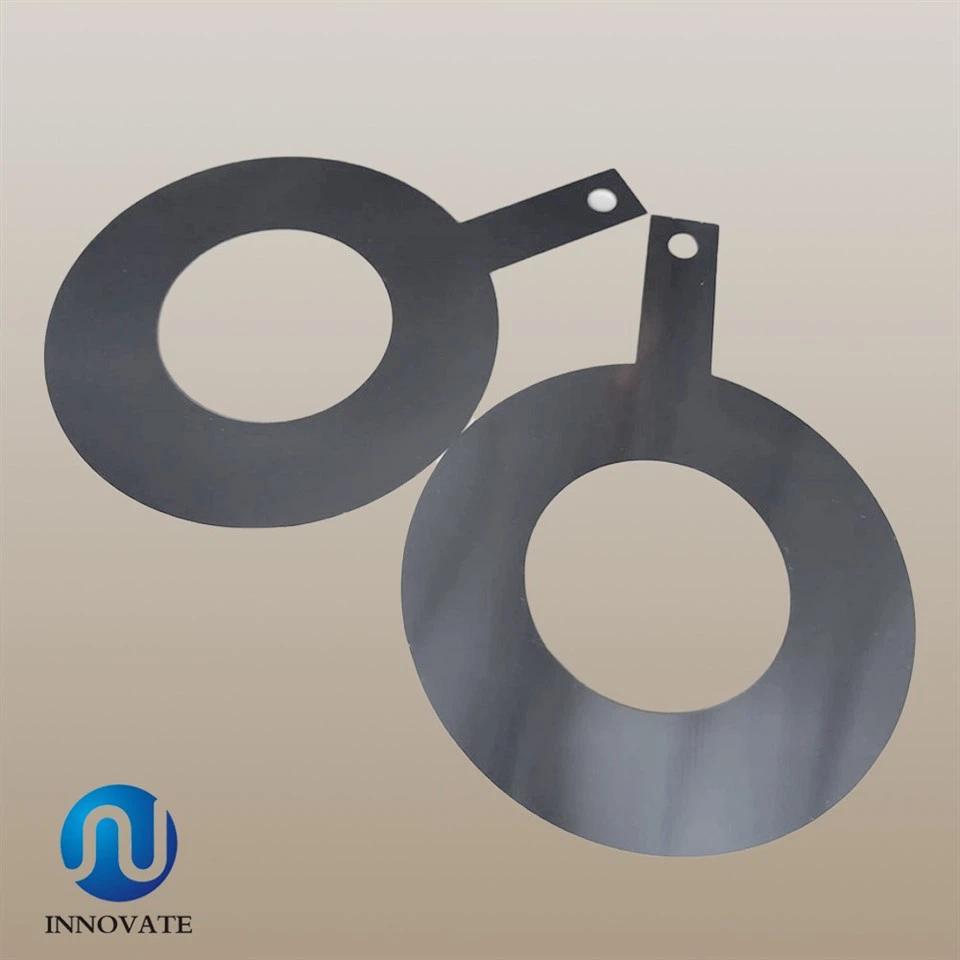
Another advantage is their high - temperature resistance. Ceramic coatings can maintain their integrity at very high temperatures, which is useful in applications such as aerospace and high - temperature furnaces. You can find more information about our tantalum products, like the Tantalum Grounding Ring, on our website.
2. Polymer Coatings
Polymer coatings are also widely used on tantalum plates. Polytetrafluoroethylene (PTFE), also known as Teflon, is a well - known polymer coating. It has excellent non - stick properties, which is beneficial in applications where materials tend to stick to the surface of the tantalum plate.
PTFE coatings also provide good chemical resistance. They can resist a wide range of chemicals, including acids and bases. This makes them suitable for use in food processing and pharmaceutical industries, where the plates need to be clean and resistant to chemical contamination.
In addition, polymer coatings can offer some flexibility. They can absorb shocks and vibrations, which is useful in mechanical applications. Our RO522/5400 High Purity Tantalum Plate can be coated with polymers to meet different application requirements.
3. Metal Coatings
Metal coatings on tantalum plates can bring some unique benefits. For example, gold coating can improve the electrical conductivity of tantalum plates. This is important in electronic applications, where good electrical performance is essential.
Silver coatings are also an option. They have high thermal conductivity, which can help in dissipating heat from the tantalum plate. This is useful in applications where heat management is a concern, such as in power electronics.
However, when using metal coatings, we need to be careful about galvanic corrosion. If the coating metal and tantalum have different electrochemical potentials, corrosion may occur at the interface. So, proper surface treatment and coating processes are necessary to prevent this.
4. Diamond - Like Carbon (DLC) Coatings
Diamond - like carbon coatings are relatively new in the field of tantalum plate coatings. They combine the hardness of diamond with the flexibility of carbon. DLC coatings offer extremely high hardness, low friction coefficient, and good wear resistance.
These coatings are great for applications where low friction is required, such as in bearings and sliding components. They can also improve the corrosion resistance of tantalum plates in certain environments. Although the cost of DLC coatings is relatively high, their performance can justify the investment in some high - end applications.
Factors to Consider When Choosing Coating Materials
When choosing a coating material for tantalum plates, there are several factors to consider.
Application Environment
The first thing is the application environment. If the plate will be used in a highly corrosive chemical environment, a ceramic or polymer coating with excellent chemical resistance would be a good choice. If it's for an electronic application, a metal coating that can enhance electrical conductivity might be more suitable.
Performance Requirements
You also need to think about the performance requirements. Do you need high hardness, low friction, good thermal conductivity, or something else? Understanding your specific needs will help you select the right coating material.

Cost
Cost is always a factor. Some coatings, like DLC coatings, are more expensive than others. You need to balance the cost with the performance and benefits you'll get from the coating.
How We Can Help
As a tantalum plate supplier, we have a lot of experience in coating tantalum plates. We can provide you with professional advice on choosing the right coating material based on your specific application. We use advanced coating technologies and high - quality materials to ensure the best performance of our coated tantalum plates.
If you're interested in our tantalum plates or need more information about the coating options, don't hesitate to contact us. We're here to help you find the perfect solution for your needs. Whether you need a small quantity for a research project or a large order for an industrial application, we can meet your requirements.
We're committed to providing high - quality products and excellent customer service. So, if you have any questions or want to start a procurement discussion, just reach out to us. We look forward to working with you!
References
- ASM Handbook Volume 5: Surface Engineering.
- Corrosion Resistance of Tantalum and Tantalum Alloys - A Technical Report.
- Polymer Coatings for Industrial Applications - A Review.