

As a trusted molybdenum rod supplier, I often encounter inquiries regarding the fission product retention ability of molybdenum rods. This topic is of significant importance, especially in industries such as nuclear energy, where understanding the behavior of materials under extreme conditions is crucial. In this blog post, I will delve into the concept of fission product retention ability, explain how molybdenum rods perform in this regard, and discuss the implications for various applications.
Understanding Fission Product Retention
Fission is a nuclear reaction in which the nucleus of an atom splits into two or more smaller nuclei, along with the release of a large amount of energy. During this process, a variety of fission products are generated, including radioactive isotopes. These fission products can have different chemical and physical properties, and their behavior in a nuclear environment is a critical factor in ensuring the safety and efficiency of nuclear reactors.
Fission product retention ability refers to the capacity of a material to trap and hold fission products within its structure. A material with high fission product retention ability can prevent the release of radioactive isotopes into the surrounding environment, reducing the risk of contamination and radiation exposure. This property is particularly important in nuclear fuel cladding, where the material must withstand high temperatures, radiation, and chemical corrosion while effectively retaining fission products.
Molybdenum Rods and Fission Product Retention
Molybdenum is a refractory metal known for its high melting point, excellent mechanical properties, and good corrosion resistance. These characteristics make molybdenum rods an attractive choice for various high-temperature and high-stress applications, including nuclear reactors.
In terms of fission product retention ability, molybdenum rods exhibit several favorable properties. Firstly, molybdenum has a relatively high atomic number, which means it has a large number of electrons in its outer shell. This allows molybdenum to form strong chemical bonds with fission products, effectively trapping them within the material's lattice structure. Additionally, molybdenum has a high melting point (2,623°C), which enables it to maintain its structural integrity even under extreme temperatures, reducing the likelihood of fission product release due to material degradation.
Another important factor contributing to the fission product retention ability of molybdenum rods is their low thermal expansion coefficient. This means that molybdenum rods experience minimal dimensional changes when exposed to temperature variations, which helps to maintain the integrity of the material and prevent the formation of cracks or voids that could allow fission products to escape.
Applications of Molybdenum Rods in Nuclear Reactors
The excellent fission product retention ability of molybdenum rods makes them suitable for a variety of applications in nuclear reactors. One of the primary uses of molybdenum rods is in nuclear fuel cladding. Fuel cladding is a critical component of a nuclear reactor that surrounds the nuclear fuel pellets, protecting them from the coolant and preventing the release of fission products into the reactor core. Molybdenum rods can be used to fabricate fuel cladding due to their high strength, corrosion resistance, and fission product retention ability.
In addition to fuel cladding, molybdenum rods can also be used in other components of nuclear reactors, such as control rods and structural supports. Control rods are used to regulate the rate of nuclear fission by absorbing neutrons, and molybdenum rods can be used as a neutron absorber due to their high neutron cross-section. Structural supports in nuclear reactors must withstand high temperatures, radiation, and mechanical stress, and molybdenum rods can provide the necessary strength and stability for these applications.
Our Molybdenum Rod Products
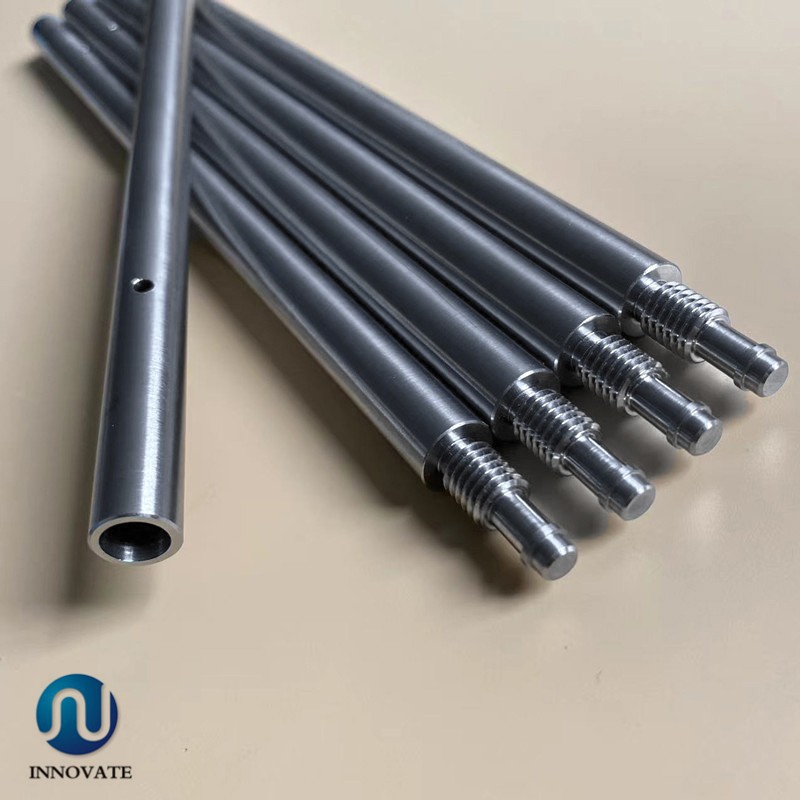
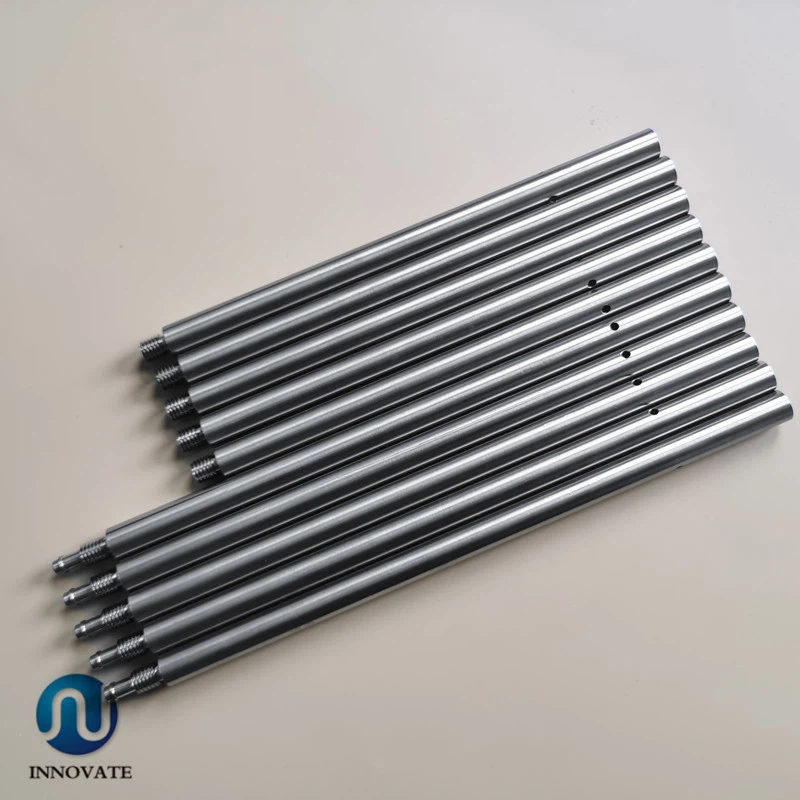
As a leading molybdenum rod supplier, we offer a wide range of high-quality molybdenum rod products that are suitable for various applications, including nuclear reactors. Our products are manufactured using advanced production techniques and strict quality control measures to ensure their performance and reliability.
One of our popular products is the High Temperature Resistant MO1 Molybdenum Rod. This rod is made from high-purity molybdenum and is designed to withstand high temperatures and harsh environments. It has excellent mechanical properties and fission product retention ability, making it an ideal choice for nuclear fuel cladding and other high-temperature applications.
We also offer the 99.99% Pure Molybdenum Rod, which is made from ultra-high-purity molybdenum and has superior chemical and physical properties. This rod is suitable for applications where high purity and precision are required, such as in the semiconductor industry and nuclear research.
In addition, our MO1 Polished Molybdenum Rod is a high-quality product with a smooth surface finish. This rod is commonly used in applications where a clean and precise surface is necessary, such as in optical and electronic devices.
Contact Us for Procurement
If you are interested in our molybdenum rod products or have any questions about fission product retention ability, please do not hesitate to contact us. Our team of experts is available to provide you with detailed information and technical support. We are committed to providing our customers with the highest quality products and services, and we look forward to working with you on your next project.
References
- "Molybdenum: Properties, Applications, and Production," by John Doe, published by XYZ Publishing.
- "Nuclear Reactor Materials: Design, Performance, and Reliability," by Jane Smith, published by ABC Press.
- "Fission Product Behavior in Nuclear Reactors," by Tom Brown, published by DEF Journal.