

What is the Young's modulus of tantalum tubes?
As a supplier of tantalum tubes, I often encounter inquiries from customers about various properties of tantalum tubes, and one of the frequently asked questions is about the Young's modulus of tantalum tubes. In this blog post, I will delve into the concept of Young's modulus, explain what the Young's modulus of tantalum tubes is, and discuss its significance in practical applications.
Understanding Young's Modulus
Young's modulus, also known as the elastic modulus, is a fundamental mechanical property that measures the stiffness of a material. It is defined as the ratio of stress (force per unit area) to strain (deformation per unit length) within the elastic range of a material. In simpler terms, it tells us how much a material will stretch or compress when a force is applied to it.
Mathematically, Young's modulus (E) is expressed as:
[ E = \frac{\sigma}{\epsilon} ]
where (\sigma) is the stress and (\epsilon) is the strain.
The unit of Young's modulus is typically pascals (Pa) or gigapascals (GPa). A higher Young's modulus indicates that a material is stiffer and less likely to deform under a given load, while a lower Young's modulus means the material is more flexible and can undergo greater deformation.
Young's Modulus of Tantalum Tubes
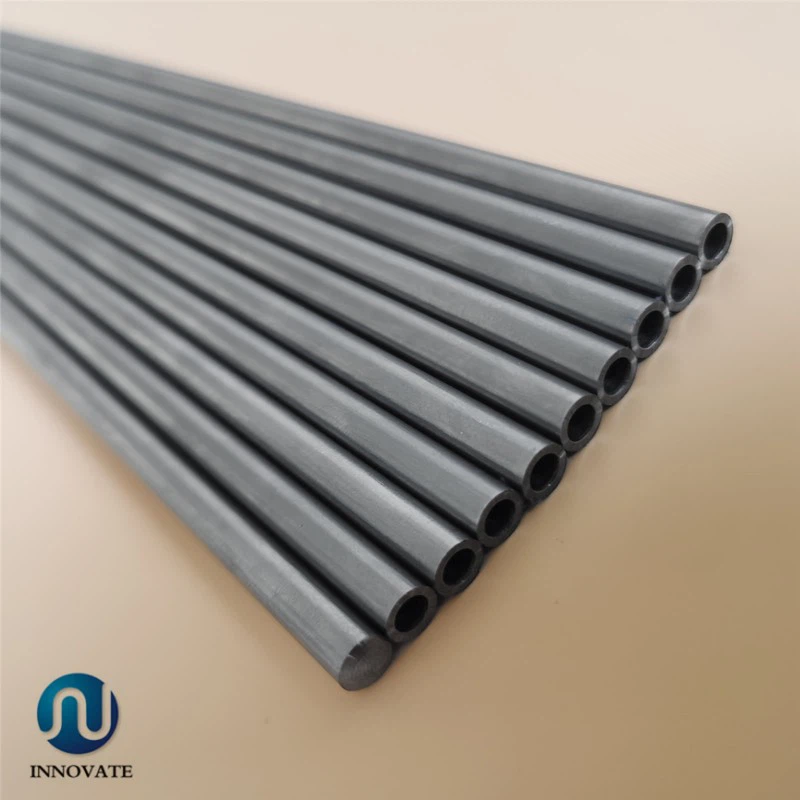
Tantalum is a rare, hard, blue-gray, lustrous transition metal that is highly corrosion-resistant. Tantalum tubes are widely used in various industries, including chemical processing, electronics, and aerospace, due to their excellent chemical and mechanical properties.
The Young's modulus of tantalum is approximately 186 GPa. This value indicates that tantalum is a relatively stiff material, which means it can withstand significant stress without undergoing excessive deformation. The high Young's modulus of tantalum tubes makes them suitable for applications where dimensional stability and resistance to mechanical deformation are crucial.
It's important to note that the Young's modulus of tantalum tubes can be influenced by several factors, including the purity of the tantalum, the manufacturing process, and the presence of any impurities or defects. For example, tantalum tubes with higher purity levels generally have more consistent and predictable mechanical properties, including Young's modulus. Additionally, the manufacturing process, such as cold working or heat treatment, can also affect the microstructure of the tantalum and consequently its Young's modulus.
Significance of Young's Modulus in Tantalum Tube Applications
The Young's modulus of tantalum tubes plays a vital role in many applications. Here are some examples:
Chemical Processing Industry: In the chemical processing industry, tantalum tubes are often used in equipment such as heat exchangers, condensers, and reaction vessels. The high Young's modulus of tantalum tubes ensures that they can maintain their shape and integrity under high-pressure and high-temperature conditions. This is essential for preventing leaks and ensuring the safe and efficient operation of chemical processing equipment. For instance, Corrosion Resistant Tantalum Tube for Chemical Industry is a product that benefits from the high Young's modulus of tantalum, providing reliable performance in corrosive chemical environments.
Electronics Industry: Tantalum is widely used in the electronics industry for manufacturing capacitors, resistors, and other electronic components. The high Young's modulus of tantalum tubes helps to maintain the structural stability of these components, which is crucial for ensuring their electrical performance and reliability. For example, tantalum capacitors are known for their high capacitance and low leakage current, and the high Young's modulus of tantalum contributes to their long-term stability and durability.
Aerospace Industry: In the aerospace industry, tantalum tubes are used in applications such as rocket engines, aircraft turbines, and satellite components. The high Young's modulus of tantalum tubes allows them to withstand the extreme mechanical stresses and vibrations experienced during flight. This is essential for ensuring the safety and reliability of aerospace systems.
Factors Affecting the Measurement of Young's Modulus
When measuring the Young's modulus of tantalum tubes, several factors need to be considered to ensure accurate and reliable results. These factors include:
Sample Preparation: The quality and geometry of the tantalum tube sample can significantly affect the measurement of Young's modulus. The sample should be carefully prepared to ensure that it has a uniform cross-section and is free from any defects or impurities.
Testing Method: There are several methods available for measuring the Young's modulus of materials, including the tensile test, the compression test, and the dynamic mechanical analysis (DMA). The choice of testing method depends on the specific requirements of the application and the properties of the tantalum tube.
Environmental Conditions: The environmental conditions, such as temperature and humidity, can also affect the measurement of Young's modulus. It is important to conduct the tests under controlled environmental conditions to minimize the effects of these factors on the results.
Conclusion
In conclusion, the Young's modulus of tantalum tubes is an important mechanical property that plays a crucial role in many applications. The high Young's modulus of tantalum, approximately 186 GPa, makes it a stiff and dimensionally stable material that can withstand significant mechanical stress without undergoing excessive deformation. This property makes tantalum tubes suitable for a wide range of industries, including chemical processing, electronics, and aerospace.
As a tantalum tube supplier, we understand the importance of providing high-quality tantalum tubes with consistent and reliable mechanical properties. We use advanced manufacturing processes and strict quality control measures to ensure that our tantalum tubes meet the highest standards of quality and performance.
If you are interested in purchasing tantalum tubes for your specific application, we invite you to contact us for further information and to discuss your requirements. Our team of experts is always ready to assist you in selecting the right tantalum tubes and providing you with the best solutions for your needs.
References
- "Tantalum: Properties, Production, and Applications." ASM Handbook, Volume 2: Properties and Selection: Nonferrous Alloys and Special-Purpose Materials, ASM International, 2001.
- "Materials Science and Engineering: An Introduction." William D. Callister Jr., Wiley, 2010.
- "Corrosion Resistance of Tantalum and Tantalum Alloys." NACE International, 2005.