

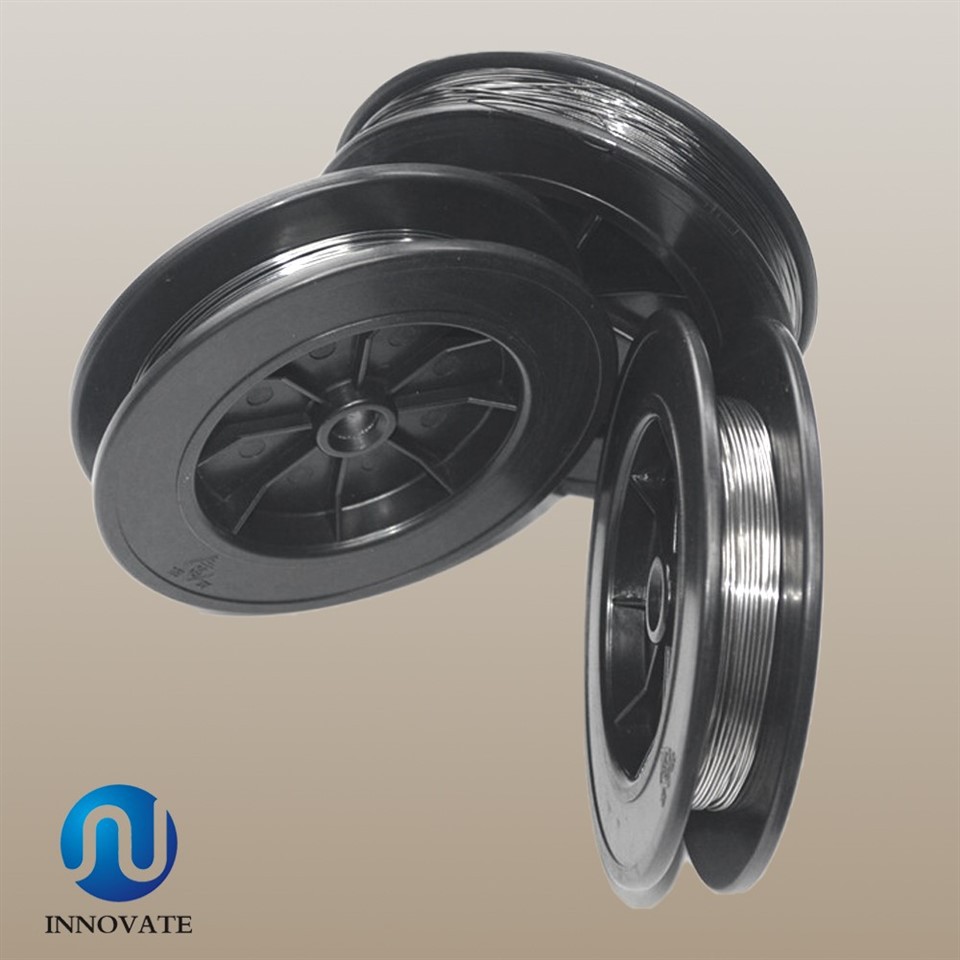


High-purity niobium wire refers to niobium wire with extremely high niobium content (usually ≥99.95% or higher), which is mainly used in fields with extremely high requirements for material purity, such as semiconductors, superconducting materials, aerospace, nuclear industry, and high-end electronic components. The following are the key characteristics, standards and applications of high-purity niobium wire:
1. Key characteristics of high-purity niobium wire:
Purity: The niobium content of high-purity niobium wire is usually ≥99.95%, and can even reach 99.99% or higher (such as 4N, 5N level).
The content of impurity elements (such as Ta, Fe, Ni, Cr, Ti, W, O, C, N, etc.) is extremely low, usually controlled in ppm (parts per million).
Physical properties:
Density: 8.57 g/cm³.
Melting point: 2477°C.
Resistivity: 15.2 μΩ·cm (room temperature).
Thermal expansion coefficient: 7.3 × 10⁻⁶ /°C.
Mechanical properties:
Tensile strength: 200-500 MPa.
Elongation: 10-30%.
Surface quality:
Smooth surface, no oxide scale, no cracks, no scratches.
Surface roughness is usually controlled at Ra≤0.8μm or lower.
2. Standards for high-purity niobium wire:
The production and quality control of high-purity niobium wire usually follow the following standards:
International standard:
ASTM B393
Domestic standard:
GB/T 14841
Industry standard:
Semiconductor industry: There are more stringent requirements on the purity, surface quality and dimensional tolerance of niobium wire.
Superconducting materials: require extremely low impurity content (especially magnetic impurities) and high uniformity.
3. Application of high-purity niobium wire:
Due to its excellent performance, high-purity niobium wire is widely used in the following fields:
Semiconductor industry:
Used to manufacture high-purity sputtering targets and semiconductor thin film deposition materials.
Superconducting materials:
Used to manufacture superconducting wires (such as Nb-Ti alloy superconducting wires) and superconducting magnets.
Aerospace:
Used for high-temperature alloys, corrosion-resistant components and propulsion system materials.
Nuclear industry:
Used for structural materials and nuclear fuel cladding materials in nuclear reactors.
Electronic components:
Used to manufacture high-precision capacitors, resistors and sensors.
Medical equipment:
Used to manufacture high-precision medical devices and implant materials.
4. Production process of high-purity niobium wire:
Raw material purification:
Use electron beam melting (EBM) or zone melting (Zone Melting) technology to purify niobium to more than 99.95%.
Wire drawing process:
Through multiple wire drawing processes, niobium ingots are processed into niobium wires of the required diameter.
During the wire drawing process, temperature, speed and lubrication conditions must be strictly controlled to avoid surface defects.
Surface treatment:
Electrolytic polishing or chemical polishing is used to remove surface oxide layers and defects and improve surface finish.
Quality inspection:
Spectroscopic analysis (such as ICP-MS) is used to detect impurity content.
Surface quality is inspected by microscopes, roughness meters and other equipment.
5. Specifications of high-purity niobium wire:
Diameter range: 0.05mm to 5.0mm (customizable upon request).
Diameter tolerance: ±0.01mm to ±0.05mm.
Length: Usually supplied in coils or straight strips, the length can be customized according to customer needs.
Hot Tags: ro4200 niobium wire, China ro4200 niobium wire manufacturers, suppliers, factory, niobium wire, RO4200 Niobium Wire


