

When it comes to the cost of a molybdenum rod, there are numerous factors at play that can cause the price to fluctuate significantly. As a seasoned molybdenum rod supplier, I've witnessed firsthand how various elements influence the final price tag. In this blog, I'll break down these factors and give you a better understanding of what goes into determining the cost of a molybdenum rod.
1. Purity of the Molybdenum Rod
The purity of a molybdenum rod is one of the most critical factors affecting its price. Higher purity molybdenum rods are generally more expensive because they require more advanced refining processes. For instance, a 99.99% Pure Molybdenum Rod is in high demand for applications where extreme precision and minimal impurities are required, such as in the aerospace and semiconductor industries. These industries rely on the high - quality performance of the material, and thus are willing to pay a premium for it.
On the other hand, molybdenum rods with lower purity levels, say around 99%, are more commonly used in general industrial applications where the performance requirements are not as stringent. The cost of these rods is relatively lower due to the less complex refining processes involved.
2. Size and Dimensions
The size and dimensions of the molybdenum rod also have a direct impact on its cost. Longer and thicker molybdenum rods typically cost more than shorter and thinner ones. This is because more raw material is required to produce larger rods, and the manufacturing process may be more challenging and time - consuming.

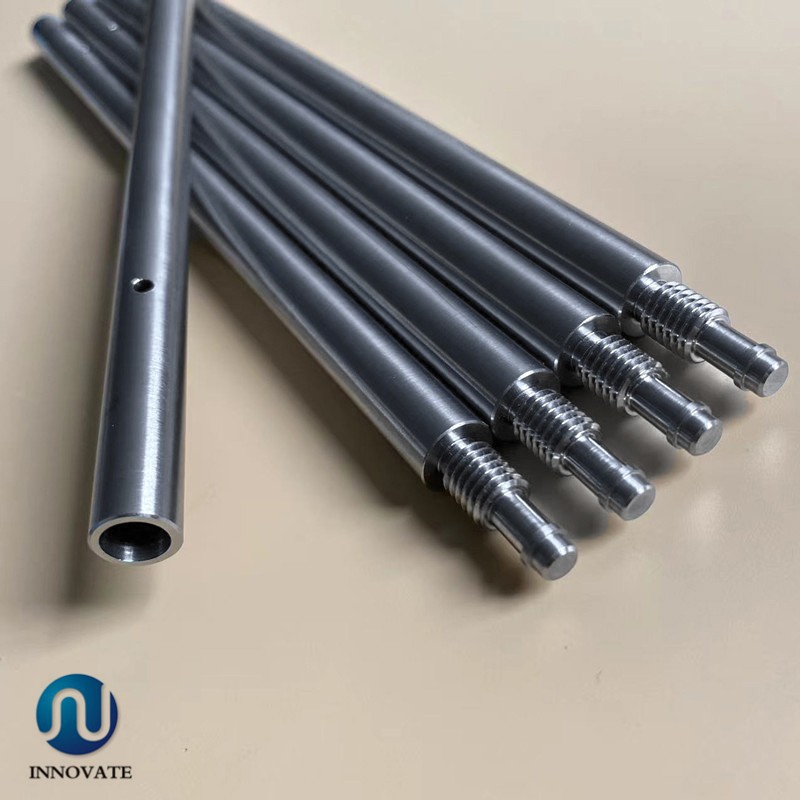
For example, a large - diameter molybdenum rod used in heavy - duty machinery may need to be forged and machined carefully to ensure its structural integrity. The additional labor and resources involved in the production of such rods drive up the cost. Conversely, smaller molybdenum rods, which are often used in laboratory settings or for small - scale manufacturing, are more affordable.
3. Market Conditions
The global market conditions for molybdenum play a significant role in determining the price of molybdenum rods. Molybdenum is a relatively rare metal, and its supply is subject to geopolitical factors, mining production levels, and global economic trends.
If there is a shortage of molybdenum in the market due to reduced mining output in major producing countries, the price of molybdenum rods will increase. On the flip side, when there is an oversupply of molybdenum, the prices tend to drop. Additionally, fluctuations in the currency exchange rates can also impact the cost, especially for international buyers and sellers.
4. Manufacturing Process
The manufacturing process of the molybdenum rod can vary, and this affects the cost. Some molybdenum rods are produced through simple processes like extrusion, which is relatively cost - effective. These rods are suitable for applications where high precision is not the main requirement.
However, High Temperature Resistant MO1 Molybdenum Rod often require more advanced manufacturing techniques. For example, they may need to be heat - treated under specific conditions to enhance their high - temperature resistance. This additional processing step adds to the overall cost of the rod.
5. Surface Finish
The surface finish of the molybdenum rod can also influence its price. A MO1 Polished Molybdenum Rod has a smooth and shiny surface, which is achieved through additional polishing processes. This type of finish is often required in applications where friction needs to be minimized or where a clean and aesthetically pleasing appearance is desired.
The polishing process requires extra time, labor, and equipment, all of which contribute to a higher cost. In contrast, molybdenum rods with a rough or unpolished surface are less expensive as they do not undergo these additional finishing steps.
Pricing Examples
To give you a better idea of the price range, let's look at some examples. A small - sized, 99% pure molybdenum rod with a simple surface finish and standard dimensions might cost around $[X] per kilogram. However, a large - diameter, 99.99% pure, polished, and high - temperature resistant molybdenum rod could cost upwards of $[Y] per kilogram.
It's important to note that these are just approximate figures, and the actual price can vary depending on the factors mentioned above and the specific requirements of the customer.
Why Choose Our Molybdenum Rods
As a molybdenum rod supplier, we take pride in offering high - quality products at competitive prices. We have a wide range of molybdenum rods in different purities, sizes, and surface finishes to meet the diverse needs of our customers.
Our manufacturing processes are state - of - the - art, ensuring that our molybdenum rods meet the highest industry standards. We also have a team of experts who can provide technical support and guidance to help you choose the right molybdenum rod for your specific application.
Contact Us for a Quote
If you're interested in purchasing molybdenum rods, we invite you to contact us for a detailed quote. We understand that every project is unique, and we're committed to working with you to find the most cost - effective solution. Whether you need a small quantity for a research project or a large order for industrial production, we can accommodate your requirements.
By reaching out to us, you'll get access to our in - depth knowledge of molybdenum rods and our dedication to providing excellent customer service. Don't hesitate to start the conversation and take the first step towards getting the right molybdenum rod for your needs.
References
- "Molybdenum: Properties, Applications, and Market Trends" - Industry Report
- "Advanced Manufacturing Techniques for Molybdenum Products" - Journal of Metal Processing
- "The Impact of Purity on Molybdenum Performance" - Scientific Research Paper