

Hey there! As a molybdenum rod supplier, I've been getting a lot of questions lately about the brittleness of molybdenum rods. So, I thought I'd take some time to break it down for you all.
First off, let's talk about what brittleness actually means. In simple terms, brittleness is a material's tendency to break or shatter when it's subjected to stress, rather than bending or deforming. You know, like when you drop a glass plate – it just smashes into pieces. That's a classic example of brittleness.
Now, molybdenum is a pretty unique metal. It's got some amazing properties, like high melting point, good thermal conductivity, and excellent corrosion resistance. These are the reasons why molybdenum rods are so popular in a whole bunch of industries, from aerospace to electronics. But one of the things that can be a bit of a challenge with molybdenum is its brittleness.
The brittleness of a molybdenum rod can vary depending on a few different factors. One of the main factors is the purity of the molybdenum. Higher purity molybdenum, like our 99.99% Pure Molybdenum Rod, generally has better ductility (which is the opposite of brittleness) compared to lower purity molybdenum. That's because impurities in the molybdenum can create weak points in the crystal structure, making it more likely to break under stress.
Another factor that affects the brittleness of a molybdenum rod is its processing history. How the rod is manufactured, including things like the temperature and pressure used during forming and heat treatment, can have a big impact on its mechanical properties. For example, if a molybdenum rod is cooled too quickly after being heated, it can develop internal stresses that make it more brittle. On the other hand, proper heat treatment can help relieve these stresses and improve the rod's ductility.
The grain size of the molybdenum also plays a role in its brittleness. Generally, smaller grain sizes are associated with higher strength and better ductility. Our manufacturing process is carefully controlled to achieve the optimal grain size for our molybdenum rods, which helps to minimize brittleness and ensure consistent performance.
Now, let's talk about how brittleness can affect the use of molybdenum rods in different applications. In some cases, a certain level of brittleness might not be a big deal. For example, if a molybdenum rod is being used in a high-temperature furnace where it's mainly just supporting a load and not being subjected to a lot of bending or impact, a slightly brittle rod might still work just fine.
But in other applications, like in precision machining or where the rod needs to be bent or formed into a specific shape, brittleness can be a real problem. If the rod is too brittle, it might crack or break during the machining or forming process, which can lead to wasted material and increased costs. That's why it's so important to choose the right type of molybdenum rod for your specific application.

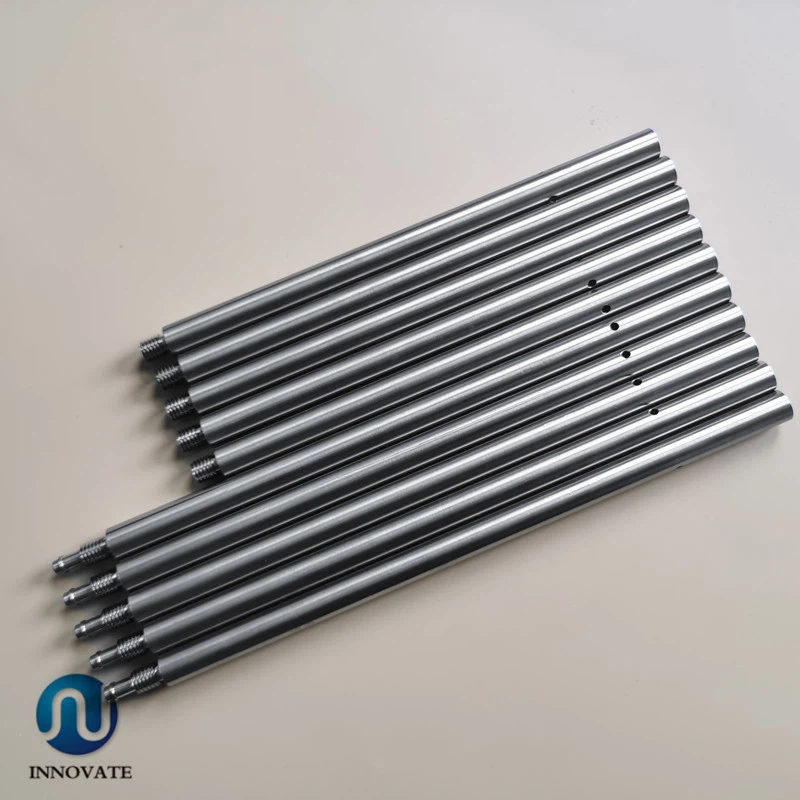
At our company, we offer a range of molybdenum rods with different levels of brittleness to meet the needs of different customers. For applications where ductility is crucial, we recommend our MO1 Polished Molybdenum Rod. This rod is specially processed to have excellent ductility, making it easy to machine and form into the desired shape.
On the other hand, if you're looking for a molybdenum rod that can withstand high temperatures and harsh environments, our High Temperature Resistant MO1 Molybdenum Rod is a great choice. While it might have a slightly higher level of brittleness compared to the polished rod, it's designed to maintain its strength and integrity at very high temperatures.
So, how can you tell if a molybdenum rod is too brittle for your application? Well, one way is to do a simple bend test. Take a small sample of the rod and try to bend it gently. If it cracks or breaks easily, then it might be too brittle. Another way is to look at the manufacturer's specifications. We always provide detailed information about the mechanical properties of our molybdenum rods, including their ductility and brittleness, so you can make an informed decision.
In conclusion, the brittleness of a molybdenum rod is an important factor to consider when choosing the right rod for your application. By understanding the factors that affect brittleness and working with a reliable supplier like us, you can ensure that you get a molybdenum rod that meets your specific needs.
If you're interested in learning more about our molybdenum rods or have any questions about brittleness or other properties, don't hesitate to reach out. We're here to help you find the perfect solution for your project. Whether you're a small business or a large corporation, we're committed to providing you with high-quality molybdenum rods at competitive prices.
So, what are you waiting for? Let's start a conversation and see how we can work together to meet your molybdenum rod needs.
References
- "Materials Science and Engineering: An Introduction" by William D. Callister Jr. and David G. Rethwisch
- "Molybdenum: Properties, Production, and Applications" by John F. Elliott