

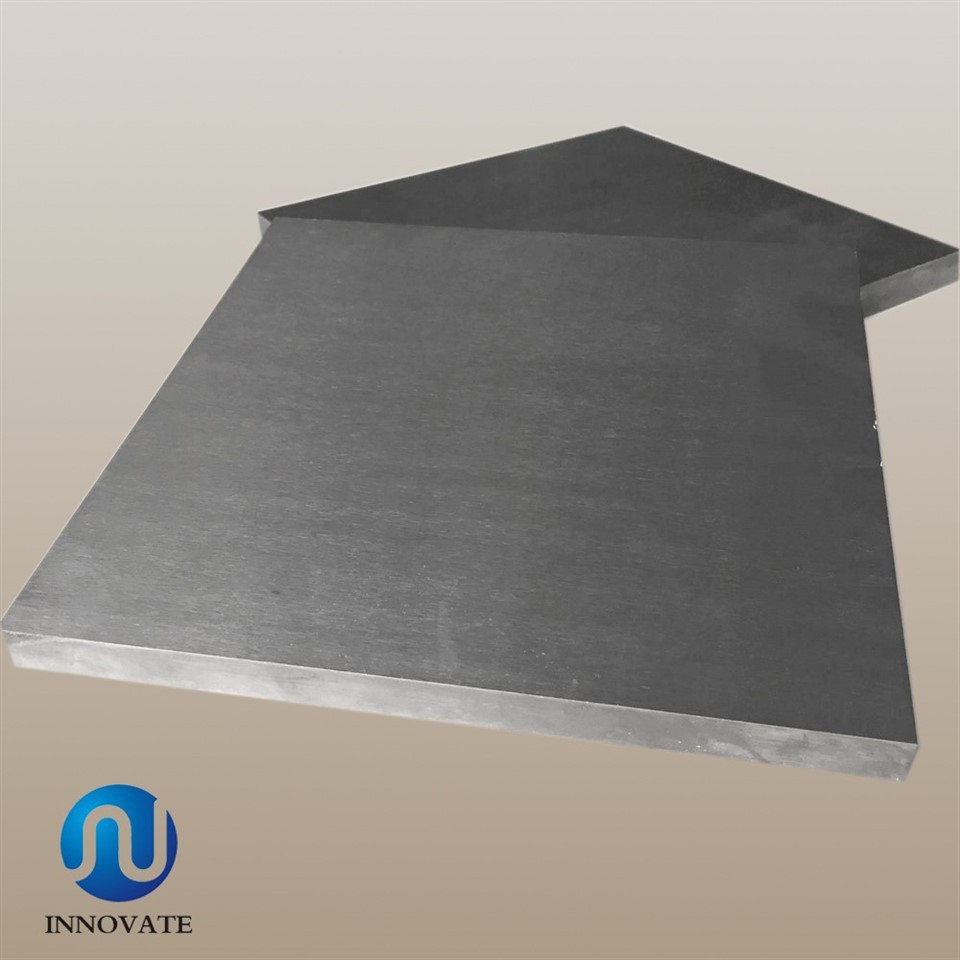
As a supplier of tungsten plates, I often get asked about the fatigue life of these essential components. Tungsten plates are renowned for their high melting point, excellent hardness, and good thermal conductivity, making them a popular choice in various industries such as aerospace, electronics, and high-temperature applications. Understanding the fatigue life of tungsten plates is crucial for ensuring the reliability and performance of the products they are used in.
What is Fatigue Life?
Fatigue life refers to the number of stress cycles a material can withstand before it fails due to fatigue. Fatigue failure occurs when a material is subjected to repeated or fluctuating stresses, which can lead to the initiation and propagation of cracks. These cracks gradually grow over time, eventually causing the material to break. The fatigue life of a material is influenced by several factors, including the material's properties, the magnitude and frequency of the applied stress, the environment in which the material operates, and the presence of any defects or stress concentrations.
Factors Affecting the Fatigue Life of Tungsten Plates
Material Properties
Tungsten is a refractory metal with a body-centered cubic (BCC) crystal structure. Its high melting point (3422°C), high density (19.3 g/cm³), and excellent hardness contribute to its good fatigue resistance. However, the fatigue life of tungsten plates can be affected by impurities, grain size, and the presence of second-phase particles. Impurities can act as stress raisers, promoting crack initiation, while larger grain sizes can reduce the material's ability to resist crack propagation.
Applied Stress
The magnitude and frequency of the applied stress are critical factors in determining the fatigue life of tungsten plates. Higher stress levels generally result in shorter fatigue lives, as the material is more likely to experience crack initiation and growth. Similarly, higher stress frequencies can accelerate the fatigue process, as the material has less time to recover between stress cycles.
Environment
The environment in which tungsten plates operate can also have a significant impact on their fatigue life. High temperatures, corrosive atmospheres, and radiation can all degrade the material's properties and reduce its fatigue resistance. For example, at elevated temperatures, tungsten can undergo creep deformation, which can interact with fatigue cracks and accelerate their growth.
Defects and Stress Concentrations
The presence of defects, such as voids, inclusions, or surface scratches, can significantly reduce the fatigue life of tungsten plates. These defects act as stress raisers, increasing the local stress levels and promoting crack initiation. Stress concentrations can also occur at geometric discontinuities, such as holes, notches, or sharp corners, further reducing the material's fatigue resistance.
Measuring the Fatigue Life of Tungsten Plates
There are several methods for measuring the fatigue life of tungsten plates, including laboratory testing and numerical simulations.

Laboratory Testing
Laboratory testing involves subjecting tungsten plate specimens to repeated or fluctuating stresses using a fatigue testing machine. The specimens are typically machined to a specific geometry and size, and the applied stress is controlled to simulate the actual operating conditions. The number of stress cycles required for the specimen to fail is recorded, and the results are used to determine the fatigue life of the material.
Numerical Simulations
Numerical simulations, such as finite element analysis (FEA), can also be used to predict the fatigue life of tungsten plates. FEA involves creating a mathematical model of the tungsten plate and applying the appropriate boundary conditions and loads. The model is then solved using numerical methods to determine the stress and strain distribution in the material. Fatigue analysis algorithms can be used to predict the initiation and propagation of cracks based on the stress and strain history, allowing for the estimation of the fatigue life.
Improving the Fatigue Life of Tungsten Plates
There are several strategies that can be employed to improve the fatigue life of tungsten plates.
Material Selection and Processing
Selecting high-quality tungsten materials with low impurity levels and fine grain sizes can improve the material's fatigue resistance. Additionally, proper processing techniques, such as hot rolling, forging, and heat treatment, can be used to optimize the material's microstructure and properties.
Design Optimization
Designing tungsten plates to minimize stress concentrations and reduce the magnitude of the applied stress can significantly improve their fatigue life. This can be achieved by using smooth transitions, avoiding sharp corners and notches, and distributing the load evenly across the plate.
Surface Treatment
Surface treatments, such as polishing and coating, can improve the fatigue life of tungsten plates by reducing surface roughness and protecting the material from environmental degradation. Polished Tungsten Plates have a smoother surface finish, which can reduce stress concentrations and improve the material's resistance to crack initiation.

Conclusion
The fatigue life of tungsten plates is a complex function of several factors, including material properties, applied stress, environment, and the presence of defects. Understanding these factors and employing appropriate strategies to improve the fatigue life is essential for ensuring the reliability and performance of tungsten plates in various applications. As a supplier of tungsten plates, we are committed to providing high-quality products that meet the specific requirements of our customers. If you are interested in learning more about our tungsten plates or have any questions regarding their fatigue life, please feel free to contact us for a detailed discussion and potential procurement.
References
-ASM Handbook Volume 19: Fatigue and Fracture. ASM International, 1996.
-Wohlfahrt, G. "Fatigue of Metals." Springer Handbook of Materials Science, edited by Cahn, R. W., Haasen, P., and Kramer, E. J., Springer, 2005.
-Zhao, X. et al. "Effect of Grain Size on the Fatigue Behavior of Tungsten." Journal of Nuclear Materials, vol. 485, 2017, pp. 568-574.