

Understanding Niobium's Basic Properties
Niobium is a high‑performance refractory metal known for its impressive strength, ductility, and stability, even at elevated temperatures. Silvery-gray in color, it is lightweight compared to other refractory metals yet offers excellent resistance to heat and corrosion. Its chemical symbol is Nb, and it has an atomic number of 41.
From a chemical standpoint, pure niobium is highly resistant to most acids and alkalis at room temperature, but it can oxidize when exposed to high temperatures in air. Physically, it has a density of about 8.57 g/cm³, making it lighter than tantalum but still offering strong structural integrity for demanding applications.
Niobium's body‑centered cubic (BCC) crystal structure plays a major role in its mechanical behavior. This structure provides a good balance of strength and ductility, allowing the metal to be shaped, welded, and machined without losing structural properties. In industrial applications, niobium typically has purities above 99.9% for optimal high‑temperature performance, as impurities can reduce its oxidation resistance and mechanical reliability.
Through the combination of high purity and its unique crystal arrangement, niobium plates are engineered for durability, making them a trusted choice in industries where both heat resistance and mechanical stability are essential.
Thermal Performance of Niobium Plates
Niobium plates are well-known for standing up to extreme heat. With a melting point of around 2,468°C (4,474°F), they handle temperatures far higher than most industrial metals without losing integrity. This makes them a solid pick for processes where other materials would soften, warp, or fail.
Niobium's thermal conductivity is moderate, which means it can spread heat evenly but not as rapidly as copper or aluminum. That balance is useful in high-temp applications where steady heat transfer is needed without rapid temperature swings. Its low thermal expansion helps it hold shape and size when heated, so components made from niobium plates are less likely to crack under repeated heating and cooling.
Under continuous exposure to high temperatures, niobium plates maintain stability-especially in inert or vacuum environments. They can operate for long periods without significant creep or deformation, making them suitable for aerospace, nuclear, and high-performance industrial systems where uptime and reliability are non-negotiable. However, in open air above roughly 400°C (752°F) without protective coatings, oxidation starts becoming a concern, so the right environment or surface treatment is key.
Mechanical Properties of Niobium at Elevated Temperatures

Niobium holds up well mechanically when the heat is on. Even at elevated temperatures, it maintains a good balance of strength retention and ductility, which means it keeps its shape without getting brittle. Unlike some metals that lose toughness quickly, niobium stays workable over a wide high-temperature range.
Strength and Ductility at High Heat
Strength retention: Niobium retains a significant portion of its tensile strength even above 1,000°C.
Ductility changes: While ductility drops slightly at higher temperatures, it generally remains higher than molybdenum, making it less prone to cracking in forming processes.
Creep Resistance and Fatigue Life
Creep (slow deformation under constant load) is where niobium performs well, though tantalum is often better for extreme cases. Niobium's creep resistance allows it to handle sustained loads without major distortion. Its fatigue life-especially in cyclic heating environments-outperforms many softer refractory metals.
Performance Comparison at Elevated Temperatures
| Property | Niobium | Molybdenum | Tantalum |
|---|---|---|---|
| Max Service Temp (°C) | ~1,300 | ~1,800 | ~1,500 |
| Ductility | High | Low | Medium-High |
| Creep Resistance | Good | Excellent | Very Good |
| Oxidation Resistance | Fair | Poor | Good |
| Ease of Fabrication | Easy | Moderate | Moderate |
When compared with molybdenum, niobium is easier to form and weld, but sacrifices some maximum temperature tolerance. Against tantalum, niobium is lighter and generally more cost-efficient while still offering solid high-temp performance.
Oxidation and Corrosion Resistance at High Temperatures
Niobium plate has good oxidation resistance when used in inert or vacuum environments, but in open air at high temperatures, it reacts with oxygen relatively quickly. Above about 400–500°C (752–932°F) in air, a surface oxide layer starts to form. While this thin oxide can offer limited protection at moderate heat, it becomes brittle and may spall off at higher temperatures, exposing fresh metal underneath. This makes continuous high-temp use in air tricky without protective measures.
In inert gases like argon or in high vacuum, niobium's oxidation rate drops dramatically, allowing it to retain its surface integrity even over long exposure times. This is why many high-temperature applications for niobium plates are in controlled atmospheres.
To boost performance in air or reactive environments, treatments and coatings are often used:
Siliconizing or aluminizing – creates a barrier that slows oxygen diffusion
Protective ceramic coatings – zirconia or alumina layers to shield the base metal
Polishing and cleaning – keeping surfaces smooth reduces oxidation points
With the right surface preparation or coating, niobium plate can operate for extended periods at high temperatures without significant corrosion or structural loss, making it a strong choice for critical components when the atmosphere is properly controlled.
Industrial Applications Utilizing Niobium Plates at High Temp
Niobium plates are widely used in industries where materials need to keep their strength and stability at extreme heat. Because niobium has high heat resistance, low thermal expansion, and good corrosion performance, it fits roles that many other metals can't handle.
Aerospace and Jet Engine Components
In aerospace, niobium plates are used in parts exposed to high combustion temperatures, such as heat shields, afterburner sections, and rocket engine components. The metal's ability to hold strength and resist creep under constant stress makes it reliable for critical flight applications.
Chemical and Petrochemical Industries
Niobium offers excellent corrosion resistance against aggressive chemicals, even at elevated temperatures. It's used in reactor linings, heat exchanger plates, and processing equipment where acids, hydrogen, or other reactive substances are present. In these cases, niobium often outlasts stainless steel and titanium.
Nuclear Reactors and High-Temperature Electronics
In nuclear environments, niobium plates are valued for their low neutron absorption and stability under irradiation. They're applied in cladding, reactor vessel components, and heat transfer elements. In electronics, niobium's stability at high temperatures supports use in semiconductor processing systems and vacuum furnace parts.
Real-World Examples
Rocket propulsion systems – NASA has used niobium alloys for engine nozzles and other thermal protection hardware.
Petrochemical heat exchangers – Niobium plates handle high-temp corrosive media without rapid degradation.
Medical imaging systems – Certain high-grade niobium plates are essential in MRI equipment production, where both purity and thermal stability matter.
By combining durability, heat resistance, and chemical stability, niobium plates solve problems across industries where other metals fail.
Selecting the Right Niobium Plate for High-Temperature Use
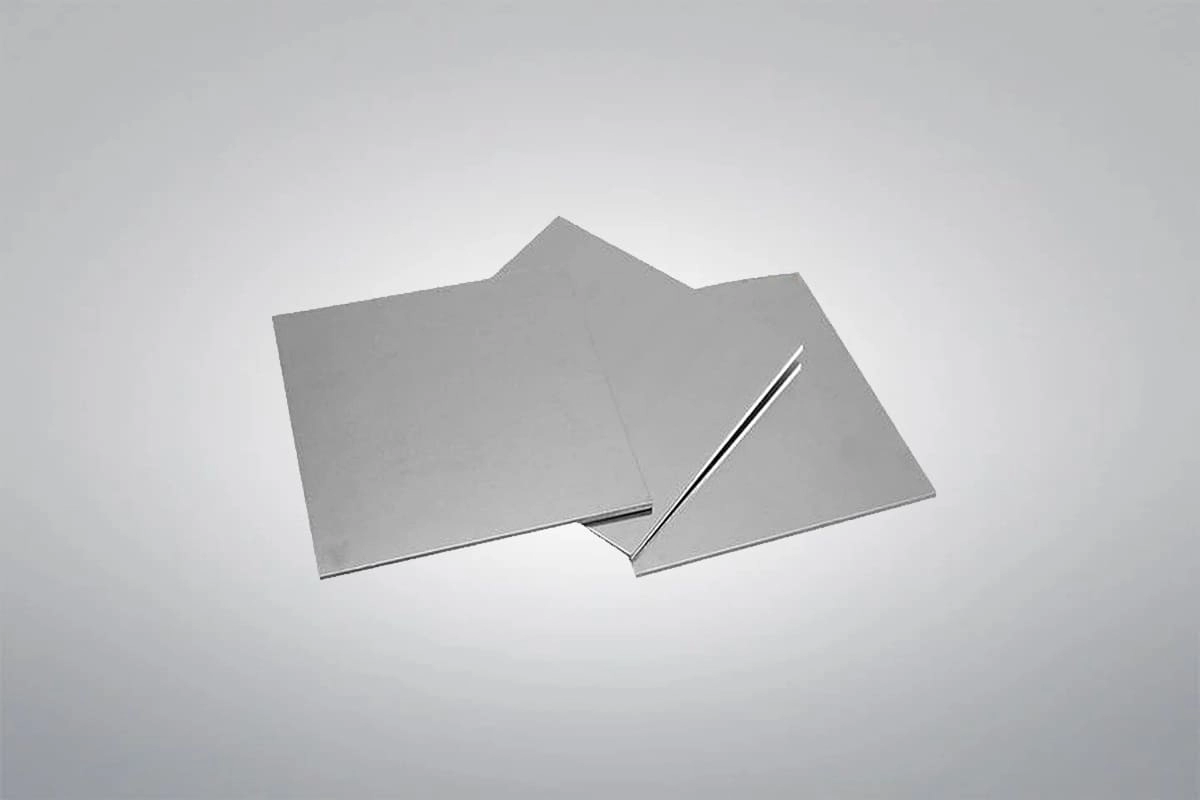
When you're sourcing niobium plate for high-temperature applications, matching the grade and specifications to your project is key. Pure niobium, such as RO4200 or high-purity 99.99% plates, offers excellent heat resistance and stability, making it ideal for aerospace, chemical processing, and nuclear environments. For even better performance in certain atmospheres, niobium alloys can be an option.
Grades and Specifications for Heat Resistance
High-Purity Niobium (≥99.9%) – Best for maximum thermal stability and corrosion resistance.
Alloyed Niobium – Adds strength or oxidation resistance when needed.
ASTM-Compliant Plates – Ensure consistent mechanical properties and traceability.
Size, Thickness, and Tolerance
The performance of niobium plates at high temperatures can vary with thickness and dimensional accuracy, especially in precision equipment:
Thickness options can range from thin foil to heavy industrial plates.
Tight flatness and tolerance help prevent warping under heat load.
Custom sizing avoids waste and ensures a perfect fit for high-value components.
Custom Manufacturing from Shaanxi Innovate Metal Technology Co., Ltd.
As a professional niobium plate supplier in China, Shaanxi Innovate Metal Technology offers:
Custom dimensions to match U.S. industry standards and designs.
Precision machining for critical tolerances.
High-purity refining to guarantee performance in extreme temperature service.
Batch consistency for repeat orders.
If you need more details on grades and specifications, you can check their high-purity 99.99% niobium plate range for reference.
Handling Fabrication and Welding at High Temperatures
Working with niobium plates requires attention to detail, especially if the material will face high-temperature service. Niobium has great heat resistance, but it's also reactive at elevated temperatures, which means both fabrication and welding need to be done right to maintain its strength and purity.
Best Practices for Fabrication
Always keep the work area clean to prevent contamination.
Use sharp tools and avoid excessive force to reduce work hardening.
Limit cold working-if heavy forming is needed, anneal in between steps to restore ductility.
Avoid exposing niobium to open air at high heat during forming, as it can oxidize quickly.
Welding Challenges and Recommended Methods
Niobium welding is more sensitive compared to common metals due to its reactivity with oxygen, nitrogen, and hydrogen when hot.
Recommended welding method: GTAW/TIG with high-purity argon shielding.
Provide full inert gas coverage-including the backside of the weld-to prevent embrittlement.
Avoid filler metals unless specified for the application.
Keep heat input controlled to prevent grain growth and maintain mechanical stability.
Heat Treatment Procedures
For stress relief or restoring ductility, anneal in a high-vacuum or inert gas furnace (typically around 1,200–1,300°C).
Do not heat treat in air; oxidation happens rapidly above 200°C without protection.
Cooling should be controlled to prevent thermal shock, especially on large plates.
For U.S. manufacturers and end users, precision in fabrication, welding, and heat treatment is critical to ensure that niobium plates keep their mechanical properties under sustained high-temperature loads. Mistakes in process control can quickly compromise performance in aerospace, chemical, or nuclear applications.
Why Choose Shaanxi Innovate Metal Technology Co Ltd for Your Niobium Plate Needs
If you're working with niobium plates for high-temperature applications, choosing the right supplier matters. Shaanxi Innovate Metal Technology Co., Ltd. is a trusted niobium plate supplier and manufacturer in China with strong experience in serving U.S. customers who need consistent quality and precision.
Quality Assurance and Certifications
We follow strict quality control from raw material selection to final inspection.
ISO-certified production processes
Full material traceability
Chemical composition and mechanical property testing before shipment
This ensures every niobium plate meets the specs needed for heat resistance, oxidation behavior, and mechanical performance.
Manufacturing Scale and Customization
We can handle both small-batch orders for R&D and large-scale production for industrial use.
Thickness range: 0.5 mm to 50 mm
Width & length per project needs
Options for high-purity niobium grades for critical applications
Custom machining is available so plates arrive ready for use, cutting down your shop time. You can check our niobium plate product range here.
| Capability | Details |
|---|---|
| Min. Thickness | 0.5 mm |
| Max. Thickness | 50 mm |
| Surface Finish Options | Polished, matte, custom |
| Alloy/Grade Options | Pure Nb, Nb alloys |
| Production Volume | Small runs to bulk orders |
Customer Support and Technical Consultation
We provide technical advice on:
Selecting the right niobium grade for temperature and corrosion requirements
Recommended fabrication and welding approaches
Coating or surface treatments to improve oxidation resistance
Our team works directly with engineers, purchasing managers, and production teams in the U.S. to avoid costly mistakes and ensure faster turnaround.
FAQ on Niobium Plate High Temperature Performance
Q: How hot can a niobium plate get before it fails?
A: Pure niobium melts at around 2,468°C (4,474°F), so it can handle extreme heat well. In practical applications, continuous use is often kept below 1,500–1,800°C to maintain strength and prevent oxidation issues.
Q: Does niobium lose strength at high temperatures?
A: Niobium retains much of its strength even when hot, but like all metals, you will see some reduction in mechanical strength beyond 1,200°C. It still outperforms many stainless steels at these temperatures.
Q: Is niobium good against oxidation when hot?
A: In air, niobium starts oxidizing at about 400–500°C. Above this, a brittle oxide layer can form. Using it in a vacuum, inert gas, or with protective coatings helps maintain its surface integrity.
Q: How does it compare to tantalum or molybdenum at high heat?
A: Niobium is lighter and more ductile than molybdenum and tantalum, making it easier to form. Tantalum offers slightly better oxidation resistance, while molybdenum has a higher melting point but is more brittle.
Q: Can niobium plates be welded for high temp applications?
A: Yes, with the right shielding (usually inert gases like argon) and clean handling, niobium welds hold up well. Special techniques are used to avoid contamination.
Q: Where is niobium plate typically used in the U.S. at high heat?
A: Common uses include aerospace components, superconductor systems, chemical processing gear, and high-temp furnace hardware. For more on where niobium is used, check our guide on top applications of niobium plates in modern industries.
Q: Where can I get custom niobium plate made for my high-temp needs?
A: Shaanxi Innovate Metal Technology Co., Ltd offers custom thickness, size, and purity grades suitable for your heat resistance requirements, with tight tolerances.